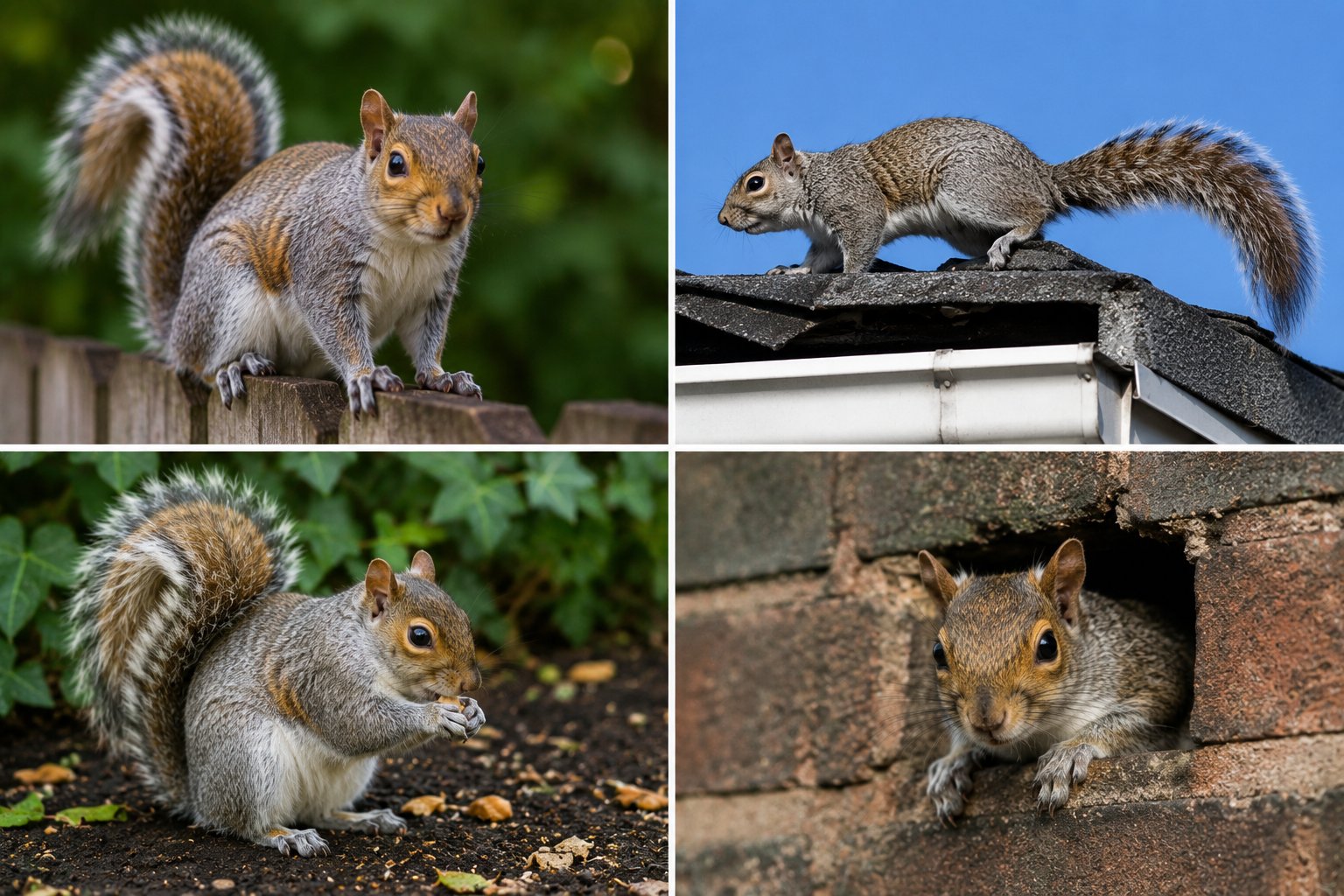
Grey squirrels are naturally drey-builders, weaving nests of twigs and leaves high in tree branches. So why do so many Newbury homeowners end up with squirrels living in their loft instead of the oak trees along the Kennet or in West Berkshire's woodland? The answer comes down to a mix of seasonal pressure, shelter, and simple opportunity — and once you understand the pattern, the behaviour makes a lot more sense.
Autumn and winter shelter-seeking
Activity in roof spaces tends to spike in autumn and into winter. As temperatures drop and trees lose their leaves, a drey offers far less protection from wind, rain, and cold than it did in summer. A dry, insulated, warm loft space is, from a squirrel's point of view, a considerable upgrade — draught-free, predator-free, and often stocked with soft insulation that makes convenient nesting material.
Breeding season pressure
Grey squirrels can breed twice a year, typically around December to February and again in summer. A pregnant female looking for a secure place to raise young is far more likely to move into a stable, enclosed loft than to rely on an exposed outdoor drey. This is one of the main reasons squirrel activity in Newbury lofts often clusters around these breeding windows, and why a single squirrel heard scratching in winter can become a family by spring if left unaddressed.
Proximity to green space
- Newbury's mix of mature gardens, hedgerows, and nearby woodland gives squirrels easy cover right up to the edge of many properties
- Overhanging branches and trees close to the roofline act as a direct route onto the roof
- Established residential areas with older housing stock often have aging fascias and soffits that are easier for squirrels to exploit
- Gardens backing onto open land or watercourses tend to see higher squirrel traffic generally
It's opportunistic, not deliberate targeting
It's worth saying plainly: squirrels aren't seeking out your house specifically. They're testing whatever is nearby, and a loft with even a small existing gap around a soffit or fascia board is an easy win compared with building a new drey from scratch. Once one squirrel establishes that a particular roof space is accessible and comfortable, the same route tends to get used repeatedly — which is why problems often recur in the same property year after year if the entry point isn't properly closed off.
If you're hearing movement in your loft, particularly as the weather turns colder, it's worth having it checked before a lone visitor becomes a breeding population. Pest Services Berkshire carries out loft inspections across Newbury to confirm activity and identify how squirrels are getting in — contact us on 0118 336 1366 to arrange a free quotation.
Think you have squirrels in your Newbury loft? Fast, professional grey squirrel control.
Get a Free Quote →Why Choose Pest Services Berkshire
We're grey squirrel control specialists covering Newbury and the surrounding area, investigating both the current infestation and how the animals are getting in. Every job starts with a free, no-obligation quotation.