Why an Established Infestation Can Show Nothing
- Nobody in the household reacts to bites. A significant proportion of people show no visible reaction, and a household of non-reactors gets no alarm at all
- The affected bed has no regular occupant — a guest room, a spare room, a bed used at weekends
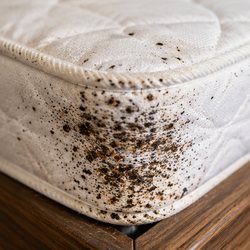
- The harbourage is somewhere never looked at, such as inside a divan drawer recess or behind a wall-fixed headboard
- The bed is always made, which covers the exact strip where evidence appears
- A mattress protector is fitted over the piping
The Indirect Signs
Small blood smears on bedding
Rust-coloured smears rather than spots, usually around the shoulders and upper back, from a sleeper rolling on a recently fed insect. They appear on the sheet rather than in a seam, which is what makes them noticeable when nothing else is.
Spotting somewhere unexpected
In a well-hidden infestation the primary harbourage may be somewhere nobody checks, but the traces show up at the edges: on the wall behind the bed, on the face of a skirting board, at a socket, or on the underside of a shelf above the bed.
The odour question
A large, established bed bug population produces a distinctive sweet, musty smell — often described as coriander or over-ripe raspberries. It is real, and it is only detectable at high numbers, which means it is a sign of a serious infestation rather than an early one.
It is also unreliable as a test: people vary enormously in whether they notice it, and a household living with it stops registering it. Worth knowing about; not worth relying on.
A pattern in the sleep rather than the skin
Somebody who has become a poor sleeper in one particular room, with no other explanation, and who sleeps normally elsewhere. It proves nothing on its own and it is a reason to look at that bed properly.
The most reliable indirect sign is a pattern in TIME. Bites, marks or bad nights that follow somebody staying in a particular room, or that stop when somebody is away and resume when they return. That shape is very hard to explain any other way.
Where To Look When the Usual Places Are Clean
- Divan drawer recesses — drawers out, torch in. Enclosed on five sides and almost never seen
- The underside of the base, including corner blocks
- Behind a wall-fixed headboard, which means taking it down
- Inside the frame, at bolt recesses and slat housings
- The back and underside of a bedside cabinet drawer
- Behind a picture or mirror above the bed
- Under the carpet edge behind the gripper, on the bed wall
Every one of those needs something moved, lifted or taken apart. That is exactly why an infestation can hide in them.
Thatcham: After a Previous Treatment
A property that has been treated before is the classic setting for a hidden population, because the obvious places have been dealt with and what remains is by definition somewhere that was missed.
So the rooms that were not part of the original job are the first place to look rather than the room that was, and the places within a treated room that need something dismantled are the second.
Do not take an absence of bites as an absence of bed bugs. It is the most common reason a household concludes a treatment worked when a population is still running in a room nobody sleeps in.
Bed bugs in Thatcham? Pest Control Specialists Berkshire treats bed bugs from £220 for the first room. Bed Bug Treatments in Thatcham has the full detail, or call 0118 336 1366.