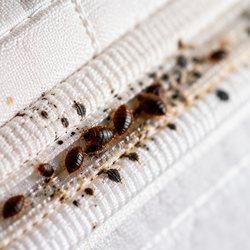
If bed bugs have come back after a treatment, the useful question is not whether the treatment failed. It is which of three things happened, because they look identical from a bedroom and they need completely different responses.
Those three are: a room that was never inspected, a stage that survived, and a fresh introduction. Bed bug treatment in Thatcham starts from £220 for the first room.
Why Bed Bugs Can Return
1. A room that was never part of the job
By some distance the commonest. The main bedroom is treated properly and the population in the spare room, the sofa or the child's room carries on, then repopulates the treated room over the following weeks.
The tell is timing and direction. A recurrence that appears six to twelve weeks later, and shows up at the bed rather than at the harbourages that were treated, usually came from somewhere else in the property.
2. A stage that survived
Eggs are cemented into seams and joints and are more sheltered than the insects that laid them. A treatment that reached the adults may not have reached everything, which is why a follow-up visit exists as a normal part of this work rather than as an admission of failure.
The tell here is that activity restarts in the same places, typically within a couple of weeks, and at small sizes — you are looking at newly hatched nymphs rather than adults.
3. A fresh introduction
The original source is still active and is still delivering. A workplace, a relative's house, a vehicle, a neighbouring flat, or a second-hand item bought since. This is the one nobody wants to consider and it is the one that repeats indefinitely if it is not found.
The tell is a gap of months of genuinely nothing, followed by a start from very low numbers again.
How to tell them apart in your own house. How long was the gap, and what size are the insects? Two weeks and very small points at survival. Two months and adults appearing at the bed points at another room. Six months of nothing then a fresh trickle points at a source outside the property.
What Makes a Return More Likely
Only the room with the bites was inspected
Somebody slept elsewhere in the house during or after treatment
Belongings were bagged up and stored in another room, then brought back
Furniture was moved out of the treated room and returned later
The room was deep cleaned soon after treatment, against the aftercare advice
The property is a flat or an HMO and the neighbouring units were never looked at
What To Do If It Has Come Back
Write down the dates: treated when, clear for how long, noticed again when
Note where the new activity is, and how big the insects are
Check the rooms that were not part of the original job, including any bed nobody sleeps in
Think honestly about a source outside the house — travel, work, a regular visit, anything second-hand
Do not start again from scratch with a shop-bought product
Call, and lead with the history rather than the symptoms
The record is worth more than the memory. A recurrence is much easier to solve with dates, locations and photographs than with "it came back after a while". If you are dealing with this now, start keeping that note today.
Questions
Bed Bug FAQs — Thatcham
How much does bed bug treatment cost in Thatcham?
From £220 for the first room. Where there has been previous treatment, tell us on the phone — a recurrence often needs a wider inspection than the original job did, and that is better established beforehand.
How do I know if I have bed bugs?
The same evidence as the first time: spotting, cast skins, eggs, live insects. After a treatment, note the size of what you find as well — very small nymphs and full-size adults point at different causes.
Can bed bugs spread to another bedroom?
Yes, and a room that was never inspected is the single most common reason a treated property has bed bugs again. If one room was treated and another has a bed in it, that other room is the first place to look.
Do I need to throw away my mattress?
Usually not, even second time round. A recurrence is far more often about scope or about a source than about one item. Get the inspection before you write off furniture.
Do I need to prepare the room?
Yes, and after a previous treatment there is one extra instruction: do not re-import. Anything bagged and stored elsewhere during the last job should not come back into the room until you have been told it can.
Can you treat flats and rental properties in Thatcham?
Yes. In a flat or an HMO, a recurrence should raise the neighbour question directly — a unit treated repeatedly while an adjoining one is not is a well-recognised pattern.
How do I book treatment?
Call 0118 336 1366 and start with the history: when it was treated, how long it stayed clear and where the new activity is.
Advice
Bed Bug Guides for Thatcham
Five guides written for Thatcham. We publish these in batches
rather than all at once, so some are still being written —
those are marked rather than linked to a page that is not there.
Treatment starts from £220 for the first room. Tell us how many rooms people are
sleeping in, what you have found — live insects, dark
spotting, cast skins — and how long it has been going on, and
we will come back to you.
Bed bug treatment from £220 for the first room
Houses, flats, HMOs and rental properties
Landlords, tenants, letting and managing agents
Preparation advice before the visit, aftercare after it