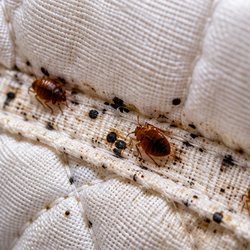
What They Look Like
- About a millimetre long — roughly the size of a grain of salt, and elongated rather than round
- Pearly white and slightly translucent when fresh
- Cemented in place. This is the identifying feature: they do not shake loose, brush off or move if you tilt the surface
- Laid in small groups rather than singly, in the same spot over days
- Empty shells stay behind after hatching, so a seam can hold both
The cement is the giveaway. Anything that moves when you tilt or tap the surface is a crumb, a fibre or a grain of something. An egg stays put.
Where They Are Laid
Where the population lives, not where it feeds — which is why finding them means you have located a harbourage rather than a route.
- Mattress piping and seams, deep in the fold rather than on the face
- The stapled fabric edge of a divan base, and inside its drawer recesses
- Frame joints, bolt recesses, cam housings and slat housings
- The back of a headboard, particularly against the wall
- Behind and under bedside cabinet drawers
- Along the skirting line and behind a carpet gripper, in an established case
Why they are cemented at all. The places bed bugs choose are vertical, awkward and in constant slight movement - the underside of a seam, the inside of a joint. An egg that could roll would end up on the floor. Cementing them is what lets the population use those places.
Why Eggs Change How Treatment Works
This is the operational part, and it explains something people otherwise find suspicious.
- An egg is more sheltered than the insect that laid it. It is inside the tightest part of a harbourage, with a shell around it
- Vacuuming does not remove them. Cemented in place, and no amount of suction changes that
- They hatch on their own schedule — typically a week or two at room temperature, longer when it is cool
- Which produces the two-to-three week pattern: a treatment goes well, the room is quiet for a fortnight, and then small pale nymphs appear in the places that were treated
That pattern is why a follow-up visit exists as normal work rather than as an admission that something went wrong, and it is worth asking at the outset whether one forms part of the job.
What Finding Eggs Tells You
- You have found a harbourage, not just a place they cross
- The population is breeding, which means it is established rather than newly arrived
- Adults are within inches, whether or not you can see them
- Timing matters now. A cluster of unhatched eggs is a fortnight of new insects waiting to happen
Theale: Looking For Them
They are small, pale and inside folds, so they need better conditions than the other evidence does.
- Good light, held at a low angle rather than pointed straight on
- Open the seam out with a bank card rather than looking at it closed
- A phone camera on macro or zoom is genuinely useful — easier than the naked eye at this size
- Look in the deepest part of the fold, not on the face of the fabric
- Tilt or tap gently: anything that moves is not an egg
Do not scrub eggs out of a seam. It is the natural response and it achieves very little - they are cemented, most will stay, and you have removed the evidence that showed where the harbourage was. Leave them and let the treatment deal with them.
Bed bugs in Theale? Pest Control Specialists Berkshire treats bed bugs from £220 for the first room. Bed Bug Treatments in Theale has the full detail, or call 0118 336 1366.