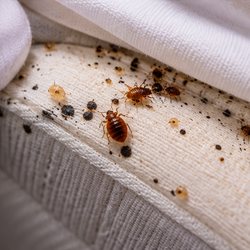
The Rule Behind the Name
Bed bugs need three things from a location, and a bed happens to supply all three better than anything else in a house.
- A host who stays still for hours, repeatedly, in the same place
- A tight, dark gap within a couple of metres of that place
- Not much disturbance in that gap
That is the whole rule. Beds win because people sleep for seven hours in the same spot every night, and because a bed is made of seams, joints, piping and slats. Nothing else in a house is quite that good — but plenty of things are good enough.
So the useful question is not "is this furniture?" but "does somebody sit still here for a long time, and is there a gap nearby?" Run that test over a house and it produces a very different list from the one people expect.
Very Common Outside the Bed
- The headboard, and the wall behind it. Barely outside the bed at all, and one of the first places a population expands into
- The divan base and its drawers, including the underside and the cardboard dust cover
- The bedside table — joints, the back of the drawer, the underside
- The sofa or armchair somebody dozes in, which passes the stillness test better than any other seat
- The skirting and carpet edge on the wall the bed stands against
Reasonably Common
- Other upholstered seating in a room where people sit for long evenings
- A rug beside the bed that never moves
- Socket and switch faces on the bed wall
- The underside of a bedroom chair, and any chair clothes get piled on
- Picture frames and mirrors hanging above or beside the bed
- A cabin bed or ottoman base with storage inside it
Uncommon, But Real in a Long-Running Case
- Curtain hems and blind fixings
- Wardrobe and drawer structure — joints, runners, the ply back panel rebate
- Loose wallpaper edges and the joint between skirting and floor
- The frame of a mirror or a wall-mounted headboard fixing
- Books and clutter stored under the bed
The presence of anything on this list is information in itself: it says the population has run out of better options, which usually means it has been running for a good while.
Where They Are Not
Worth saying plainly, because a lot of unnecessary work and unnecessary throwing-away happens here.
- Not in your hair or on your skin. They feed and leave; they do not live on a host
- Not in the garden, and not in the fabric of a house from outside
- Not in the kitchen or bathroom, except by accident — nobody sits still there for hours
- Not usually in clothing in drawers, though the drawer structure is a different matter
- Not carried by pets in the way fleas are
Ascot: What This Changes About Treating a Room
Two practical consequences, and they are the reason the distinction is worth understanding rather than just knowing.
- Treating the bed alone is treating part of a site. The headboard, the base, the bedside furniture and the perimeter are the same site, and a job that stops at the mattress is the one that returns
- Any seat somebody spends long hours in belongs in the inspection, in any room, whether or not anybody has been bitten there
Do not start sleeping on the sofa because the bed has bed bugs. It converts the best-passing location outside the bedroom into a second site, and it is the commonest way a contained problem spreads through a house.
Bed bugs in Ascot? Pest Control Specialists Berkshire treats bed bugs from £220 for the first room. Bed Bug Treatments in Ascot has the full detail, or call 0118 336 1366.