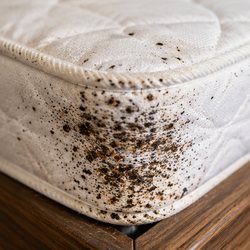
1. The Mattress
Almost never goes. A sealed textile envelope with no route into the interior, so everything is on the surface geometry: piping, seams, labels, handle recesses, vents, tufting. All reachable.
Goes if: the cover is split or torn, so there now is a route inside; it was at the end of its life anyway; or somebody has soaked it in a shop-bought product.
2. The Base
Usually stays, and it is the component most often involved. Divan bases hold more than mattresses do — the stapled fabric edge, the drawer backs and runners, the empty recesses, the underside and the corner blocks.
Goes if: the construction has sealed voids that genuinely cannot be opened, with an established population inside them. That is a real situation and it is not the common one.
3. The Frame
Stays. Wooden or metal, a frame is dismantled and treated — joints, bolt recesses, cam housings, slat housings. That is normal work rather than an exceptional measure.
Goes if: it is falling apart anyway. Nothing to do with the insects.
4. The Headboard
The one most likely to go, and still usually stays. A plain timber or metal headboard is treated like a frame. A padded one is treated at its seams, piping and button recesses.
Goes if: it is heavily padded or deep-buttoned with activity established through the stuffing, where there is no way to reach the inside without destroying it. Of all five components this is the one where that most often applies.
5. The Slats
Stay. They lift out, they get treated, they go back. The housings they sit in and the rubber holders on a sprung base are the parts that matter.
Which means the usual answer is: keep four, maybe replace one. Not "get rid of the bed". And the one most likely to go is the headboard, which is also the cheapest of the five to replace.
Why This Matters Financially
"Throw the bed away" and "replace the headboard after the room has been treated" are two very different amounts of money for the same problem, and the second one is usually the correct advice.
It also matters because a whole bed leaving a house is a much bigger disposal job than one component — more items through the hall, more shedding on the route, and more to wrap.
Cookham: Ask Component By Component
When somebody inspects the bed, the useful question is not "is the bed all right". It is five questions:
- What was found on the mattress, and can it be treated?
- What was found in the base, and can the drawer recesses and underside be reached?
- What was found in the frame joints?
- What was found behind or inside the headboard, and can it be reached?
- What was found in the slat housings?
Five answers, and between them they tell you exactly what needs replacing — which is usually nothing, and occasionally one thing.
Do not buy a new bed while the room is untreated. Every component you replace goes into a room with a population still in the components you kept, in the skirting and in the carpet edge. Treat the room, then decide.
Bed bugs in Cookham? Pest Control Specialists Berkshire treats bed bugs from £220 for the first room. Bed Bug Treatments in Cookham has the full detail, or call 0118 336 1366.