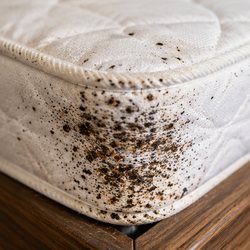
Found in a Harbourage: Almost Certainly More
Inside a mattress seam, a frame joint, a divan drawer recess or behind a headboard.
Why: an insect that has selected a harbourage next to a host is behaving like a resident rather than an arrival. Look along the rest of that seam or joint for spotting and cast skins — if either is there, it is established and the question is settled.
Verdict: treat it as an infestation until an inspection says otherwise.
Found With Spotting or Cast Skins: Definitely More
The insect is almost beside the point at that stage. Cast skins mean something fed and grew there over weeks; spotting means something has been resting there repeatedly.
Verdict: established. Do not spend another fortnight confirming it.
Found Wandering on a Floor or a Wall: Ambiguous
This is the genuinely uncertain case and it is the one most people are actually in.
Why: it could be a resident crossing between the harbourage and a bed, which means more. It could equally be a single insect that came in on a bag last night and has not established anything, which happens and comes to nothing surprisingly often.
What decides it: whether there is anything else. Check the nearest bed thoroughly. Nothing else at all is genuinely reassuring; anything else at all is not.
Verdict: check properly, then check again in a week and a fortnight.
Found on Luggage, a Coat or a Bag: Probably Not, Yet
Straight after travel, a stay somewhere, or bringing something second-hand home.
Why: this is the classic arrival scenario, and an arrival is not an infestation. One insect on a case has not laid anything, built anything or established anywhere.
What to do: deal with the item now and you have very likely closed it off. Everything washable to a hot wash and a full hot tumble dry, check the case or bag properly, and do not put it in a bedroom.
Verdict: act on the item, watch the bedroom for a fortnight.
Found on You, or in Clothing You Are Wearing: Depends Where You Have Been
Why: they do not live on people. An insect on your clothing is in transit, and the useful question is where from — your own bed, or somewhere you have been.
Verdict: check your own bed properly. If it is clean, think about where you have spent time sitting still recently.
The two things that convert "maybe" into "yes". Cast skins and eggs. Neither is produced by an insect that has just arrived, so either one means a population has been living there. One insect plus either of those is not one bed bug.
What Not To Conclude
- Not "it was just one, so it is fine." Not until you have checked the nearest bed properly
- Not "one means hundreds." Sometimes true, sometimes not, and the panic version leads to mattresses in skips for no reason
- Not "I killed it, so that is that." The one you saw is the one that was out; the question is what is in the seams
- Not from the size. A small pale nymph means a population hatched nearby, if anything more significant than an adult
Hungerford: The Sensible Response to Genuine Ambiguity
- Catch it and keep it. Do not squash it
- Photograph where it was found
- Check the nearest bed properly — piping, frame joints, behind the headboard
- If you find nothing, check again in one week and again in two
- Change to a plain light-coloured bottom sheet in the meantime
- Do not throw anything away and do not spray anything
- If anything at all turns up on the second or third check, call
A small pale nymph is more significant than an adult. Adults travel; a millimetre-long, nearly translucent nymph almost certainly hatched within a few feet of where you found it, which means eggs and means a harbourage nearby.
Bed bugs in Hungerford? Pest Control Specialists Berkshire treats bed bugs from £220 for the first room. Bed Bug Treatments in Hungerford has the full detail, or call 0118 336 1366.