Why Photographs Usually Fail
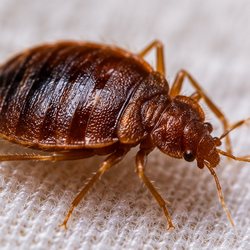
- Scale. A photograph of a small insect with nothing beside it could be almost anything. Size is one of the most useful distinguishing features and a picture routinely throws it away
- Focus. Phone cameras struggle at close range on something a few millimetres across, and the details that identify it are the ones that blur first
- Damage. Most photographs are of a squashed insect on a tissue, which has lost its shape, its colour and its outline
- Angle. The identifying features are on the top surface and the edges, and the picture is usually taken from whatever direction the insect happened to be lying
- Colour. Indoor light shifts it considerably, and colour and fullness are what distinguish a fed insect from an unfed one
If you are taking a photograph anyway, put something next to it for scale. A coin, a ruler, the edge of a fingernail. That one detail makes an unusable photograph useful more often than any other.
How To Keep It Well
- A small clear container with a lid is best — a pill pot, a spice jar, a clean sample tub. It can be examined from every side without being handled
- Clear tape onto a white card is the next best thing, and it is what most people have to hand. Press it down flat and do not fold it
- A sealed clear bag works, though the insect moves around in it and creases obscure the view
- Do not squash it before or after — a flattened specimen loses most of what identifies it
- Do not put it in water, alcohol or anything else unless you have been asked to
- Keep it somewhere it will not get thrown away. More specimens are lost to a tidy-up than to anything else
The Label Is Half of It
A specimen with no information attached answers one question. A labelled one answers four, and the extra three are the ones that shape the inspection.
- The date, and the time of day if you know it
- The room
- Exactly where in the room — which piece of furniture, and which part of it. "Mattress seam, head end, left side" is worth more than the specimen
- What you were doing when you found it: stripping the bed, unpacking a case, moving a chair
- Whether anything else was near it, particularly dark spotting or shed skins
Write it on the card or on a piece of paper taped to the container. It will be legible in three weeks; your memory of which side of the bed it was will not.
What Identification Actually Settles
- Whether it is a bed bug at all. Several harmless household insects are mistaken for them, and a treatment for the wrong thing is wasted money and wasted weeks
- Whether it is an adult or a nymph. A nymph means breeding, and breeding means an established population rather than an arrival
- Whether it had fed, which says something about how long it has been in the room
- Where to start looking, which is what the location note buys
Hungerford: Keep More Than One If You Find More
- A second and third specimen from different places in the room build a map rather than a single point
- Shed skins are worth keeping too, and are often easier to find than live insects
- Keep them separately, each with its own location note, rather than all in one pot
- Keep them until the work is finished, not just until the first visit
- If a second one turns up weeks after a treatment, that specimen is considerably more informative than the first one was
Do not throw the specimen away once somebody has looked at it. If there is any later question about what was found and when, a labelled specimen and a dated note are the whole of the evidence - and in a rented property they are worth a great deal more than a recollection.
Bed bugs in Hungerford? Pest Control Specialists Berkshire treats bed bugs from £220 for the first room. Bed Bug Treatments in Hungerford has the full detail, or call 0118 336 1366.