1. The Shape
A bed bug is flattened top to bottom. Seen from the side an unfed adult is almost a wafer, which is exactly what lets it sit inside a seam. Four to five millimetres, oval, reddish-brown, wingless. Rounder and darker after a meal.
A flea is flattened side to side. Narrow like a blade seen from above, which is what lets it move through hair and fur. Smaller, around two to three millimetres, dark, hard-shelled and very difficult to squash.
2. Whether It Jumps
Fleas jump, and they jump remarkably well. Bed bugs cannot jump at all and cannot fly at any stage. If it sprang away from you, it was not a bed bug.
3. Where You Find It
- Bed bugs: in tight gaps close to where somebody sleeps. Mattress seams, frame joints, behind headboards, the edge of the carpet at the bed wall
- Fleas: in carpet pile, in pet bedding, on soft furnishings and on the animal. Out in the open floor rather than in a joint
That difference matters practically: a flea treatment goes over floor areas and pet bedding, and a bed bug treatment goes into seams and joints. Doing one when you needed the other achieves very little.
4. The Evidence They Leave
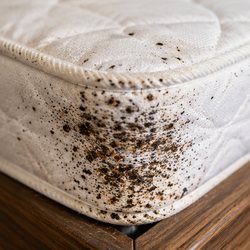
- Bed bugs: dark spotting clustered along a seam, pale cast skins, and millimetre eggs cemented in place
- Fleas: flea dirt - dark specks in an animal's coat and in its bedding, which turn rust-red when wetted on white paper. Eggs are laid loose and drop off into the carpet
The question that usually settles it in one go. Is there a pet, or was there one recently? Fleas need an animal host to establish. A bed bug problem in a house with no pet is far more likely than a flea problem in one.
What About the Bites?
Bites are the least reliable way to tell these apart. Flea bites are typically around ankles and lower legs, because that is where an insect coming off a floor reaches; bed bug bites are more often on skin exposed in bed - arms, shoulders, neck, back.
That is a tendency rather than a rule, and reaction varies so much between people that it cannot confirm or rule out either one. A pharmacist or GP can advise on the skin. Only a look at the room tells you what caused it.
Two Others Worth Ruling Out
- Carpet beetle larvae. Elongated and obviously bristly, found in carpet, wardrobes and under furniture. They damage fabric and they do not bite - although the hairs of some species can irritate skin
- Spider beetles. Shiny, rounded and long-legged, frequently reported as bed bugs and completely harmless to people
If you catch one, keep it. A specimen in a small sealed clear bag, or a sharp close-up photograph with something for scale, settles in seconds what can otherwise take a full inspection. Do not squash it first.
Bed bugs in Berkshire? Pest Control Specialists Berkshire treats bed bugs from £220 for the first room. Bed Bug Treatments Berkshire has the full detail, or call 0118 336 1366.