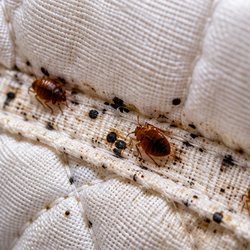
Days One to Three: Activity Is Normal
Seeing insects in the first days after a treatment is expected rather than alarming. Harbourages have been disturbed and treated, and movement out of them is part of how it works.
What to do: nothing dramatic. Do not clean the room, do not re-treat it yourself, and do not put the bagged laundry back. Note what you see and where.
Week One: Fewer, and Slower
The direction matters more than the count. Fewer sightings, in fewer places, is the shape you want. Anything you do see should look sluggish rather than purposeful.
What to do: keep sleeping in the same room. It sounds counter-intuitive after a treatment, but a host in the room is part of what draws surviving insects across treated surfaces.
Weeks Two to Three: The First Real Test
This is when eggs that were laid before the treatment hatch. Eggs are cemented into seams and joints and are more sheltered than the insects that laid them, which is exactly why a follow-up visit exists as normal work rather than as an admission that something went wrong.
What a survival problem looks like: activity restarting in the same places it was found originally, at small sizes. You are looking at newly hatched nymphs — a millimetre or two, pale and translucent — not adults.
What to do: report it, with the size. If a follow-up visit forms part of your job this is roughly when it belongs.
Weeks Four to Six: Nothing Should Be Happening
A quiet month is the outcome. If activity appears now, it is usually not survival — the timing is wrong for that.
What a scope problem looks like: full-size insects appearing at the bed rather than in the harbourages that were treated. Something arrived rather than hatched, which means it came from somewhere in the property that was never inspected.
- A spare room or a child's room with a bed nobody sleeps in
- A sofa somebody has been sleeping on
- An armchair in the bedroom that was not part of the job
- In a flat or an HMO, an adjoining unit
- Belongings that were bagged, stored elsewhere and brought back
What to do: ask for the rooms that were not part of the original job to be looked at. Treating the same room a second time will produce the same result.
Month Three and Beyond: Look Outside the House
A long clear gap followed by a fresh trickle from very low numbers is the signature of a new introduction rather than a survival.
What a source problem looks like: months of genuinely nothing, then it starts again the way it started the first time. The original route in is still open and still delivering.
- A workplace, a vehicle, or somewhere visited regularly
- A relative's or friend's house where somebody stays
- Anything second-hand bought since the treatment
- A neighbouring flat in the same block
- Travel — and the suitcase that came back with it
What to do: this is the one that repeats indefinitely until the source is found, so it is worth thinking honestly about rather than treating the bedroom a third time.
The two questions that sort it in thirty seconds. How long was the gap, and how big are the insects? Two weeks and very small points at survival. A month or two and full-size points at another room. Six months of nothing then a trickle points at a source outside the property.
Things That Make a Return More Likely, and Are Avoidable
- The room was cleaned thoroughly a few days after treatment
- Somebody slept elsewhere in the house during or after it
- Bagged belongings went to another room and later came back
- A different bed, mattress or headboard was put into the treated room
- Only the room with the bites was ever inspected
Keep a Note From Day One
A recurrence is dramatically easier to sort out with dates than without them, and nobody is keeping them at the point they would be useful.
- Date of the treatment, and which rooms were done
- Anything seen in the first week, and where
- The date the room went genuinely quiet
- The date anything was seen again, where, and how big
- Anything that changed in between - travel, visitors, new furniture
Do not start again with a shop-bought product. Whatever is happening, adding an aerosol to a recently treated room disperses what is left, can affect the treated surfaces, and destroys the evidence that would have told somebody which of the three problems you actually have.
Bed bugs in Berkshire? Pest Control Specialists Berkshire treats bed bugs from £220 for the first room. Bed Bug Treatments Berkshire has the full detail, or call 0118 336 1366.