
Ants in the Garden Are Normal
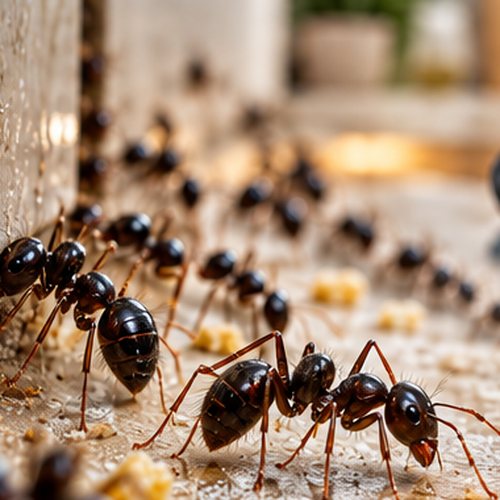
Around Ascot the houses tend to be larger and the gardens with them, often backing on to heathland or woodland. In a garden that size there will be many ant colonies: under the terrace, in the lawn, along the edges of beds, beneath paths and in the base of garden walls. They aerate soil, they eat other insects and they are part of a healthy garden.
Treating every nest in a large garden is neither sensible nor possible. Treatment earns its place where a colony is next to the house and sending workers inside, or where nests are lifting a patio or making a lawn unusable.
Lawns and Soil Mounds
Small domed heaps of fine soil in a lawn are usually the work of the yellow meadow ant, a pale ant that lives almost entirely underground and feeds on tiny insects among the grass roots. It rarely comes indoors. The mounds are a nuisance for mowing and can make a lawn lumpy, but they are not a threat to the house.
- Brush mounds flat with a stiff broom on a dry day before mowing, rather than cutting through them.
- Mounds in rough grass or wild areas are best left alone.
- A lawn full of mounds is a garden problem, not a household one, and shop products are unlikely to clear it.
- If you are unsure which ant is which, the Sandhurst page goes through the common ones.
Patios and Terraces by the House
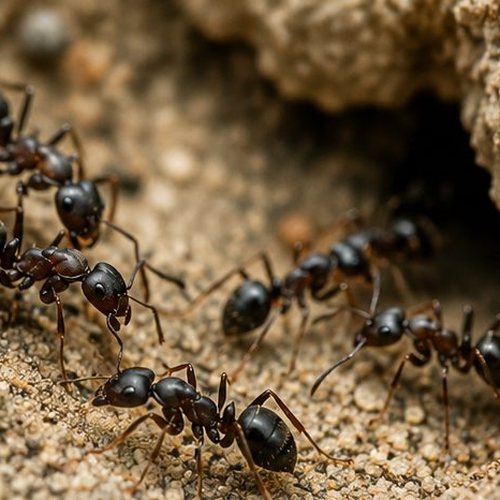
The nests that cause trouble are the ones under paving next to the house. Black garden ants like the warm, dry sand under slabs, and a patio outside the kitchen or the French doors puts a colony a few feet from the nearest food. Signs are fine sand heaped in the joints between slabs, slabs that rock, and a steady trail from the paving to the threshold.
Over years, ants can move enough sand from under a patio to let slabs settle unevenly. It is slow, and it is not structural, but it is worth dealing with before the paving needs relaying.
The one thing that matters most: concentrate on the band of garden closest to the house. A nest thirty yards down the lawn will rarely bother you; the one under the slab by the back door will every summer.
Treatment Outdoors and In
Outside, a residual insecticide goes in at the nest entrances in the patio joints, along the wall bases and at the thresholds the ants use to get in. Where ants have already reached the kitchen or a garden room, gel bait placed in cracks and out of reach is carried back to the colony and shared, reaching the queen. Activity may carry on for a few days; do not hose, sweep or spray over treated joints for as long as you are told.
Children and pets are kept off treated paving until it is dry and as instructed on the day. Tell us at booking about children, dogs and cats that use the garden, garden ponds, fish tanks and anyone vulnerable. Ant control is a fixed £240, confirmed before anything is booked, and what the treatment involves in your garden is explained before you commit.
Keeping the Band by the House Clear
After treatment, re-point open patio joints with a jointing compound rather than loose sand, keep beds and bark mulch back from the wall so the airbricks and damp-proof course stay clear, and cut back plants that touch the house and give ants a bridge to windows. Year-on-year prevention is laid out on the Cookham page.