
Start by Assuming Black Garden Ant
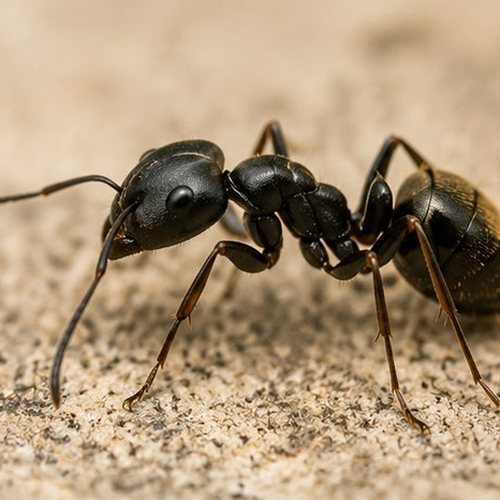
Sandhurst sees a lot of households arriving and leaving, with the Royal Military Academy on its doorstep, and a first summer in a new house is often when people meet its ants. The odds are heavily in favour of one species. The black garden ant, Lasius niger, is by far the usual ant in and around UK homes.
- Dark brown to black, all one colour.
- Workers are small, a few millimetres long, and all much the same size.
- Moves in clear trails between the nest and food.
- Nests outside, under paving, at wall bases and in lawns and borders, and comes indoors for sugary food.
- Does not sting; at most a worker may nip.
If what you have matches that list, you have garden ants. The rest of this site is mostly about them, and treatment with gel bait and a residual insecticide at the nest works well.
Yellow Meadow Ants
Pale yellowish-brown, smaller-looking and rarely seen above ground. The yellow meadow ant lives in lawns and grassland and builds low domed mounds of fine soil. It feeds underground and very seldom comes into houses. If your only sign of ants is a crop of soil mounds in the grass, this is almost certainly what you have, and it is a lawn matter rather than a household one. Large gardens and lawns are covered on the Ascot page.
Red Ants
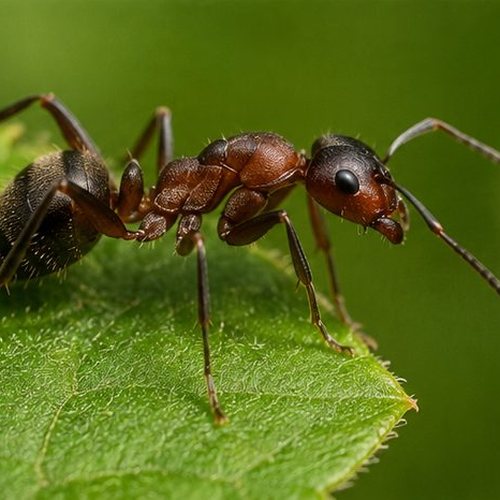
The ants people call red ants are usually Myrmica, reddish-brown, slightly slimmer and slower than garden ants. They nest in soil, under stones and in damp corners of the garden, and they can sting. The sting is mild for most people, a sharp prick followed by some itching, but it is a reason to deal with a nest beside a play area or a path. Anyone showing signs of a severe allergic reaction to a sting needs 999; a pharmacist or GP can advise on milder reactions.
Pharaoh Ants, and Why They Are Different
Pharaoh ants are tiny, pale yellow to light brown, and tropical. They cannot live outdoors in Britain, so they are found only in heated buildings: blocks of flats with shared heating, hospitals and commercial kitchens. They are uncommon in ordinary houses. They matter because the usual approach fails with them: spraying makes a colony split into several, so they need a bait programme and are a specialist job.
The one thing that matters most: if the ants are very small, pale and inside a warm building in winter, do not spray them. Tell us, and send a photograph; it changes how they are treated.
Flying Ants and the Termite Question
Winged ants on a warm summer day are the same species as the ants on your patio, off on their mating flight; termites are not a normal problem in UK homes, so a swarm of winged insects here is almost always ants. More on that is in what are flying ants.
Whichever ant it is, treatment is planned around what you have. Gel bait goes in cracks and out of reach, and a residual insecticide is used at the nest and entry points where that suits the species. Children and pets are kept off treated areas until dry and as instructed on the day, and you should tell us at booking about children, pets, fish tanks or anyone vulnerable. Ant control is a fixed £240, confirmed before anything is booked, with what the treatment involves explained before you commit.