
Early Spring: The First Scouts
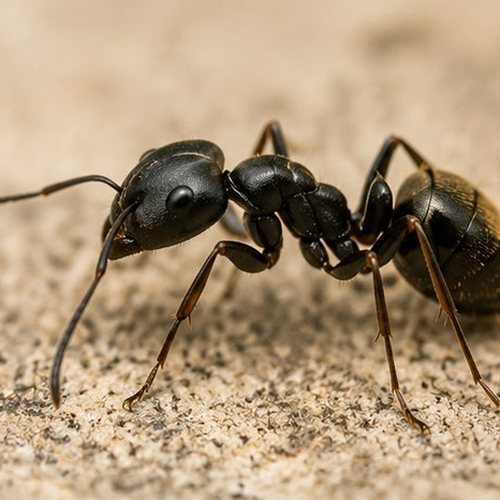
Through the winter a garden ant colony sits quietly deep in the nest, and you see nothing. The first warm days wake it up. A few workers appear, often one or two at a time on a sunny windowsill or crossing the kitchen floor by the back door.
These are scouts. If one finds something worth having — a smear of jam, cat food, a sticky recycling box — she lays a scent trail home and others follow it. This is the easiest moment in the year to get ahead: wipe the route with washing-up liquid in water and put the food away, and a trail may never form.
Late Spring Into Early Summer: The Trail
As the colony grows it needs more food, and a scout’s find becomes a steady line of ants along a skirting, up a table leg or along the edge of a worktop. By now it is a routine: the same path, the same entry point, every warm day.
A trail at this stage is the most useful thing a household can have, because it leads back to the nest. Follow it outside and you will usually find the entrance under a slab or at the base of a wall. Treatment works well here too, while the colony is actively feeding and will carry bait home.
When to act: the first time a trail keeps coming back on consecutive days. Waiting for the autumn to settle it only means a bigger nest next spring.
High Summer: Busy Nests and Flying Ants
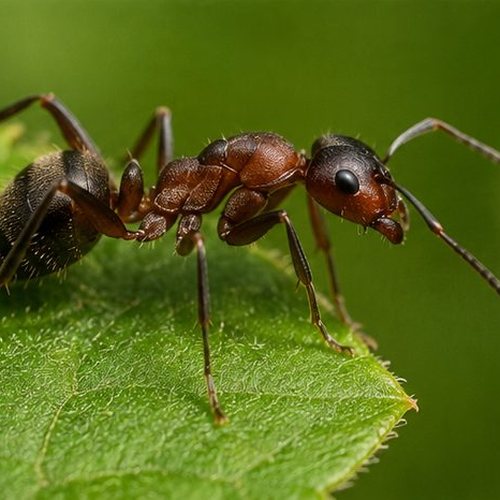
July and August are when activity peaks. Workers are foraging for sugar and protein to feed a large brood, and they travel further into the house for it. Hot, dry weather can bring them indoors for water as well, around sinks and pet bowls.
This is also when mature nests release their winged ants on a few warm, humid afternoons. If they come up inside your house, the nest is in or under it. What to do on that day is on our page about the flying ant day.
Late Summer and Autumn: Winding Down
From September the numbers fall away. Nights cool, foraging shortens, and the colony gets ready for winter. It is tempting to think the problem has solved itself. It has not; the nest is still there and will wake again in spring, usually larger.
Late summer is a good time for the jobs that keep them out: sealing gaps at thresholds and patio doors once the nest has been dealt with, clearing soil and plants away from airbricks, and deciding where food and recycling will live next year. The full routine is on our page about keeping ants out next year, and the month-by-month calendar is in when is ant season.
Treatment at Any Point in the Season
We use gel bait placed in cracks and out of reach so workers carry it to the queen, and a residual insecticide at the nest, entry points and outside wall base where needed. Ant control in Henley-on-Thames is a fixed £240, confirmed before anything is booked, and we explain what the treatment involves beforehand. Please mention children, pets, fish tanks or anyone vulnerable when you book; treated areas stay off limits until dry and for as long as we tell you.