
Why a Period House Behaves Differently
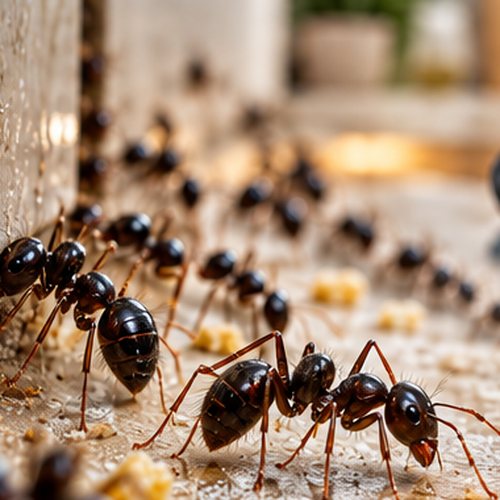
Most houses of this age stand on shallow footings with a ventilated space under the ground floor. The boards sit on joists above bare earth or rubble, kept dry by airbricks in the outside walls. For ants that space is sheltered, dry and connected directly to the garden soil.
Across Caversham, many homes follow that pattern, and it explains a common puzzle: ants appearing in the middle of a front room, far from any door, coming up between the floorboards. They have walked in under the house and up through the gaps between boards. For older buildings more generally, including soft mortar, see our page on older buildings.
Four Places to Look
Airbricks
Check each airbrick along the front and side walls. If the soil in the bed has built up to it, or a climbing plant covers it, the ants have a ready path in. Airbricks must stay open for the floor timbers, so the answer is to clear the soil back, never to block the vent.
Bay windows
A bay often has its own shallow foundation and has moved a little against the main wall over a century. Look along the skirting inside the bay and at the joint where the bay meets the house outside. A line of ants running into the corner of the bay is very typical.
Hearths and chimney breasts
An old hearth is a stone or tiled slab laid on a bed of rubble and lime, with the floorboards stopping just short of it. Ants use the gap round the hearth edge as a doorway from the void. Blocked-up fireplaces can hide a similar gap behind the board.
Rear additions and sculleries
The back wing of these houses was often built later, on a solid floor at a different level. The step between the two is a classic entry, especially where an old kitchen floor meets the hall boards.
Treating Without Lifting Floors

There is no need to lift boards or open up a hearth to deal with ants. Gel bait is placed into the gaps they are using, out of reach, and the foragers take it down to the colony. A residual insecticide goes along the outside wall base and around airbricks, where the ants cross on their way in.
The price is a fixed £240, confirmed before anything is booked, and we explain what the treatment involves beforehand so nothing comes as a surprise. At booking, mention children, pets, fish tanks or anyone vulnerable at home; treated areas are kept clear until dry and as you are told on the day.
The one thing to remember: do not vacuum or mop the board gaps where bait has gone in for the period you are told. Ants still coming up for a few days are collecting it, which is exactly what should happen.
Is the House Being Damaged?
Black garden ants do not eat joists or floorboards. What they can do over years is carry fine sand and grit out of lime mortar joints and from under paving, which is why small heaps of dust sometimes appear at the base of an old wall. Damp or crumbling timber is a separate problem worth a builder’s eye. The honest picture of what ants do and do not harm is set out in do ants cause damage to your home.