
They Do Not Eat Your House
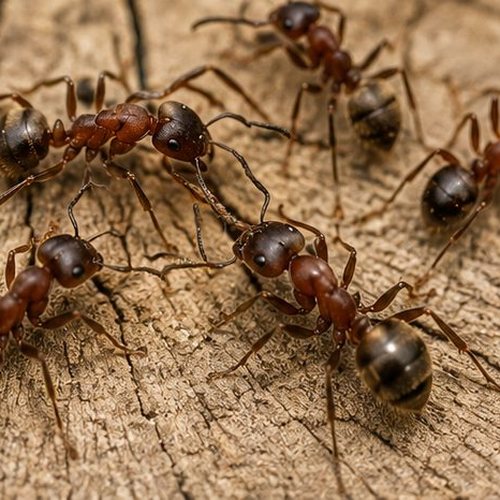
The black garden ant lives on sugary liquids, small insects and scraps of food. It has no interest in timber as food and cannot digest it. Finding ants near skirting, a window frame or a door lining means they are using it as a route, not chewing it.
You may have read about carpenter ants, which excavate damp wood for nesting. They are a problem in parts of North America; they are not a recognised house problem in the UK, and the ants in a Berkshire kitchen are not them. If wood in your house is soft or crumbling, the cause is far more likely to be damp or wood-boring beetle, and that is a question for a surveyor.
What They Can Do Outside
The real wear happens where the nest is. Garden ants dig out chambers and carry the loose material to the surface, and over a few seasons that adds up:
- Paving and patios. Sand is carried up from under slabs and block paving, leaving joints empty and, in time, slabs that rock or sink slightly.
- Mortar joints. Old, soft mortar at the base of a wall can be loosened and picked out where a nest runs behind it.
- Lawns and borders. Heaps of fine soil and uneven patches, a nuisance for mowing more than anything else.
None of this is sudden. It is slow and cosmetic in most cases, but a patio that keeps losing its jointing sand is often sitting on a colony.
What They Can Do Inside
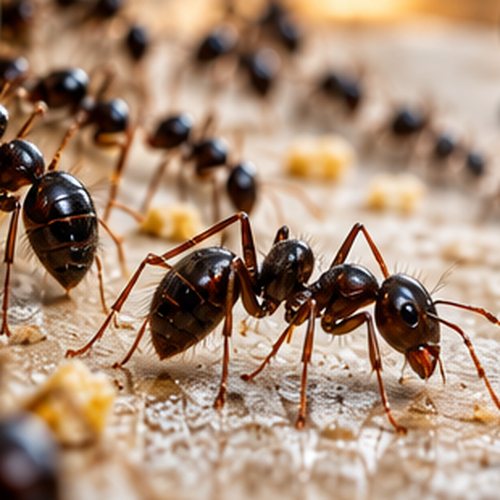
Indoors the main harm is to food. Ants walk over bins, drains and the garden on their way in, so anything they reach in a cupboard is best thrown away rather than picked over. Open packets of sugar, cereal and biscuits are the usual casualties.
Occasionally ants find their way into electrics: sockets, light switches, a consumer unit or outdoor fittings. They are drawn to the warmth and the sheltered space. It is not common, but if you see ants coming out of a socket, stop using it and get an electrician to check it as well as dealing with the nest.
Do not spray insecticide, water or anything else into a socket or switch to get at ants. Turn it off at the consumer unit if you are concerned and leave the fitting alone.
Pharaoh Ants: the Exception
Pharaoh ants are tiny, pale yellowish ants from the tropics that can only survive in heated buildings. In the UK they turn up mainly in large warm premises such as hospitals, blocks of flats and commercial kitchens, and they are uncommon in ordinary houses.
Where they are established they are a genuine hygiene problem, because they nest in wall voids and service ducts and forage everywhere, including sterile and food areas. They also react badly to spraying: the colony splits into several new ones, so they need a bait-based approach and it is a specialist job.
Very small, pale ants indoors in winter are worth reporting. Garden ants are dark and quiet in the cold months. Do not spray them; ring us and describe them first.
Businesses and Food Premises
For a business that handles food, ants are a compliance problem as much as a nuisance, because there is a legal duty to keep pests out. That side is covered on the commercial premises page. For a home, the honest summary is that ants are worth dealing with for your food, your patio and your patience, not because the house is at risk. A treatment aimed at the nest is covered in what ant control costs.