
Why a Routine Beats a Once-a-Year Blitz

A treated nest is gone, but the garden is still full of colonies, and every summer new queens from nests round about land, shed their wings and start fresh. Some will set up near your walls. Whether their workers end up in your kitchen depends mostly on two things: what they find inside and how easily they get there.
That is why prevention is a set of small habits spread through the year rather than one big spray. If ants have come back already and you want to know why, our article on why ants keep coming back works through the causes; this page is about stopping the next round.
In Autumn and Winter: Seal the Gaps
The quiet months, when the ants are underground, are the time for sealing. Doing it while a nest is active only moves the foragers, so wait until the treated colony has stopped.
- run a bead of exterior sealant along gaps under back door and patio door thresholds
- fill the joint where the kitchen worktop upstand meets the wall
- seal round pipes where they pass through the outside wall
- fix lifted skirting and the gap where it meets a hard floor
- repoint any mortar joints at the wall base that have gone sandy
In Spring: Clear the Wall Base
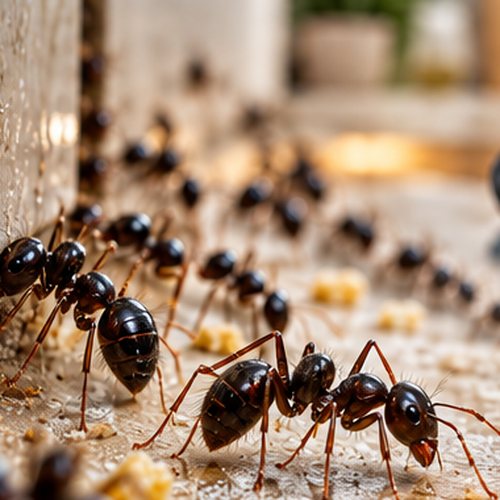
Ants like to nest right against a house, where the soil is warm and the wall gives shelter. Make that strip less inviting before the first foragers appear, usually as the weather warms.
Pull soil and bark mulch back so it sits well below the damp-proof course and clear of every airbrick. Keep climbing plants trimmed off the wall and away from window frames. Where a flower bed runs right up to the house, a narrow gravel strip along the foot of the wall gives ants less to work with. The month-by-month picture of when they wake up is in when is ant season in Berkshire.
All Summer: The Kitchen Habits
This is the part that decides whether a passing scout becomes a trail. Once one worker finds sugar and lays a scent line, others follow within hours.
- store sugar, honey, jam, syrup and biscuits in sealed containers
- wipe spills and sticky rings on the worktop straight away
- rinse bottles, cans and yoghurt pots before they go in the recycling
- lift pet food bowls once the animal has eaten, rather than leaving them down all day
- empty the kitchen bin often and keep the lid shut
The habit that matters most: the first ant you see indoors is a scout. Wipe its path with a cloth and washing-up liquid, not just water, because the detergent removes the scent. Wiping away that first line stops a trail before it starts.
In a Thames village like Cookham, with gardens, hedges and open ground all round, a few ants outside in summer are normal and not worth treating. A steady line into the house, or ants indoors in several rooms, points to a nest close by. If you need to find it first, our guide to following the trail walks you through it. Treatment is a fixed £240, confirmed before anything is booked and explained beforehand. Tell us about children, pets, fish tanks and anyone vulnerable when you book, and keep off treated areas until dry and as instructed on the day.