
The Ants You Can See Are Not the Problem
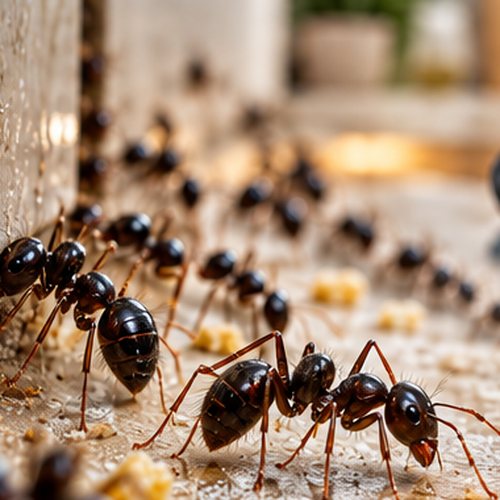
Every ant on your kitchen floor is a sterile worker. Her job is to find food and bring it home. The colony she belongs to lives somewhere out of sight — under a slab, at the base of a wall, under the floor — and at its centre is a single queen laying eggs day after day through the season.
Kill a hundred workers and the nest barely notices. There are thousands more below, and the queen replaces them. So any method that only kills the ants it touches is working on the wrong end of the problem.
Why Each Shop Remedy Falls Short
Aerosol sprays
A spray kills on contact, which is satisfying for about a day. It does nothing to the nest, and a sprayed trail puts off any worker that might have carried something useful back to the queen. Sprayed next to a bait, it stops the bait working.
Powders
Ant powder along a threshold kills the workers that walk through it and makes others take another route. The result is often ants coming in by a different gap a metre along. Powder also gets tracked on shoes and paws and blown about outdoors.
Boiling water from the kettle
A kettle poured into an entrance kills what it reaches near the surface. The brood chambers and the queen are usually well below that, and the water cools fast in the soil. It scalds the plants round the edge and can wash out the sand under paving. The nest is typically back at work within days.
What actually matters: something has to get to the queen. Everything above kills workers; only a bait the ants carry home, or treatment put into the nest itself, reaches her.
What Does Work at Home
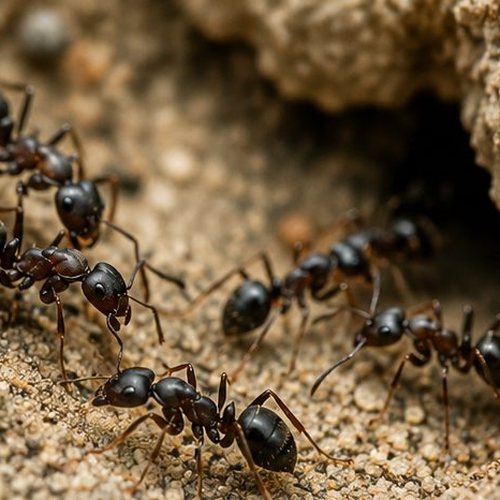
Some things are worth doing yourself. Wiping the trail with washing-up liquid in water removes the scent that guides other workers in. Sealing sugary food and clearing crumbs takes away the reason to visit. A shop gel bait, placed on the trail and left alone for the ants to carry off, can deal with a small nest. The methods that do help are set out in how to get rid of ants yourself, and our comparison of DIY and professional treatment looks at the same question across other pests.
The shop route runs out when the ants come back after two or three goes, when you cannot find the nest, or when they are coming up inside the house from under the floor or a wall.
What We Do Differently
We find the nest and its routes first, then use a professional gel bait placed in cracks and out of reach, a residual insecticide at the nest, entry points and outside wall base, or both. How that process runs is described in how professional ant treatment works.
Please tell us what you have already put down, because a fresh layer of spray or powder can put ants off the bait. Stop using them a day or two before we come. Ant control in Crowthorne is a fixed £240; that figure, and what the treatment involves, are both confirmed before you book. If there are children, pets, fish tanks or anyone vulnerable at home, say so when you ring.