What the Fixed £240 Pays For
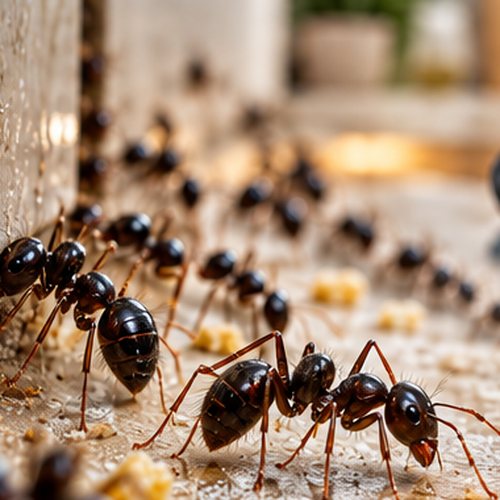
There is one figure: a fixed £240, told to you on the phone and confirmed before anything goes in the diary. For that we treat the ant problem at your property. That means tracking where the workers are coming from, treating the nest or the ground around it, and dealing with the routes they use to get indoors.
Every house is a little different, so what the treatment involves at your address is explained to you before you book, not after. If you want to know what to ask and what to have ready when you ring, how much ant control costs in Berkshire goes through it.
Why Ants Come In, and Where the Nest Usually Is
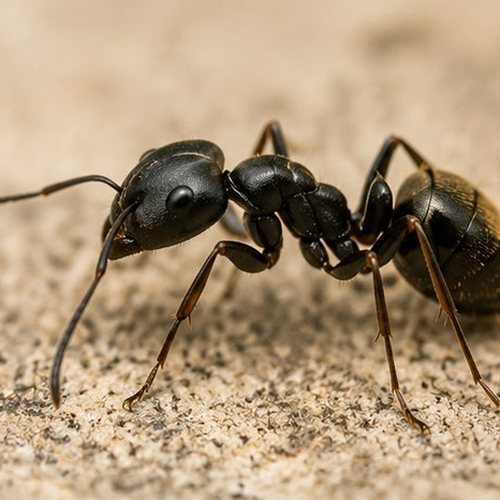
In and around Berkshire homes the culprit is nearly always the black garden ant. Its nests are outdoors: under patio slabs and block paving, in lawns and borders, and tight against the base of a house wall. Now and then a colony settles under a floor or inside a wall base, which is when ants seem to appear from nowhere indoors.
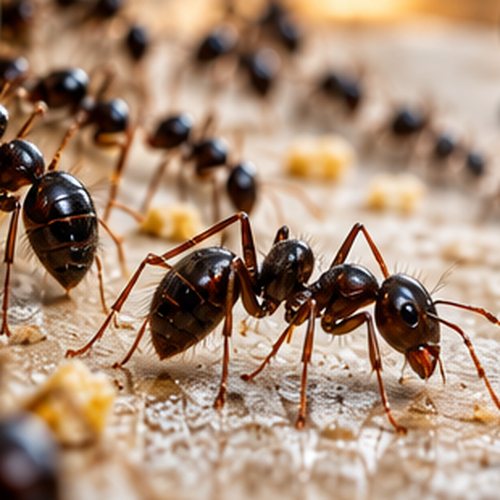
The ants you see inside are sterile workers out foraging. One finds something sweet, heads home laying a scent trail, and the rest follow it back to the source. Jam on a worktop, a sticky fizzy-drink can in the recycling or a bowl of cat food is enough. Why do ants come into the house explains what draws them, and our Maidenhead page deals with the kitchen itself: worktops, cupboards and where trails tend to run.
Ants are busy from spring into autumn and busiest in high summer, then go quiet over winter. When is ant season in Berkshire sets out the calendar month by month.
Quick Checks You Can Do Today
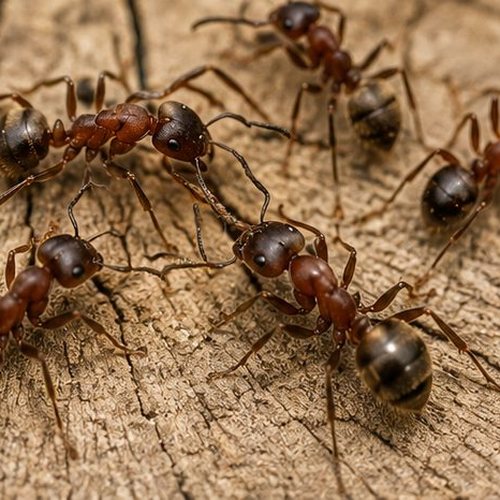
A few minutes of watching tells you a great deal, and it helps us when you call. On a warm afternoon, look for:
- where the trail comes in: a door threshold, the gap under a patio door, a crack in the skirting or the edge of a floor tile;
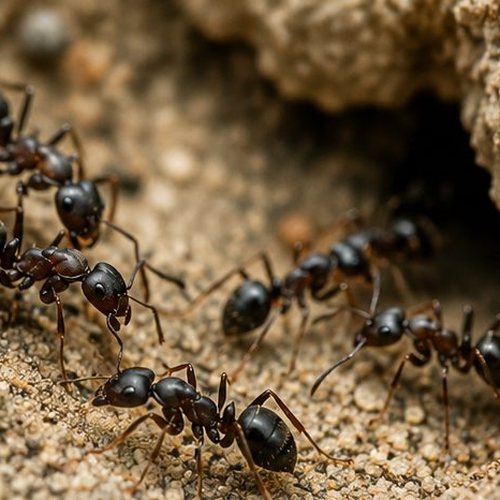
- little heaps of fine, sandy soil between paving slabs or along the bottom of an outside wall, which usually mark a nest entrance;
- whether there is one trail or several, and whether they head towards the same corner of the house;
- ants appearing from a socket, a skirting board or a floor with no obvious outside route, which points to a nest in the structure;
- what they are feeding on, so you can move it.
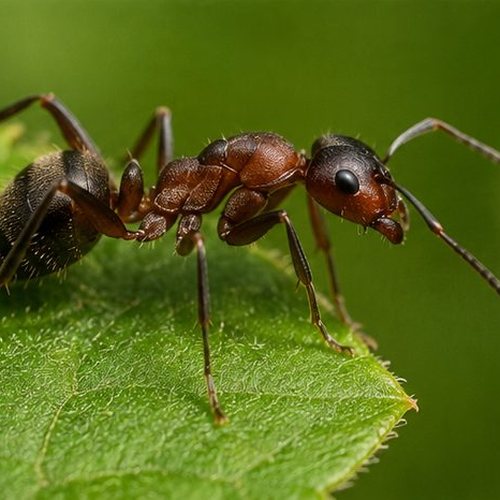
How to find an ant nest covers the clues in more detail, and our Twyford page walks you round your own property following the trail back. If they seem to be living in the house itself, our Hungerford page on ants in walls and under floors is the one to read. Not sure it is even a garden ant? Our Sandhurst page helps you tell the common kinds apart.
How an Ant Treatment Works
The aim is the queen. A black garden ant colony has a single one, deep in the nest, laying eggs all season. Kill a thousand workers and she simply raises more, which is why a treatment is built around getting something back to her.
- On the phone we ask where you see ants, what the house and garden are like, and who lives there, including children, pets and anyone vulnerable, plus fish tanks.
- At the property we follow the trails, look for the nest and note every point where ants are getting in.
- Gel bait goes into cracks and gaps on the routes, out of reach. Workers eat it and carry it home, where it is shared through the colony and reaches the queen.
- Where it is needed, a residual insecticide is applied at the nest, along entry points and at the outside wall bases.
- You are told what to leave alone, and for how long, before we go.
Expect to keep seeing ants for a few days while foragers pick up the bait and take it back. That is the treatment working rather than failing. How does professional ant treatment work explains the method step by step.
The part that decides the result: leave the treated areas and the bait alone. Mop, spray or wipe over them in the first few days and you remove what the ants were meant to carry home. You are told on the day exactly what to avoid and for how long.
Flying Ants, Briefly
On a few warm, muggy days in mid to late summer, mature nests release winged males and young queens all at once, and many nests across a district tend to go together. They are harmless and gone within hours: the males die and the queens drop their wings to look for a spot to start again. A swarm coming up inside the house is different, because it means a nest in or under the building. What are flying ants covers the biology, and our Newbury page says what to do on the day they emerge at your house.
What to Do, and Not Do, Before We Come
Some things help straight away. Wipe the trail with a cloth and washing-up liquid to lift the scent, put sugary food in sealed tubs, rinse cans and jars before they go in the recycling, and pick up pet food once your animal has finished. How to get rid of ants yourself sets out the DIY steps that genuinely help, including shop gel baits used the right way.
Other things make the job harder. Sprays, powders and kettle water kill the ants they land on and leave the nest untouched, and spraying beside a bait stops the ants taking it. Hold off on sealing gaps, too: close them before the nest is treated and the ants simply find another way in. Our Crowthorne page explains why the shop remedies disappoint.
Children, Pets and Treatment
We do not call any insecticide treatment safe in general. What we can tell you is how it is done: gel baits are put into cracks and gaps where hands and paws do not reach, and any residual product goes on the nest, entry points and outside wall bases rather than across floors. Children and pets are kept off treated areas until they are dry and for as long as you are told on the day.
Tell us when you book about young children, dogs, cats, rabbits, fish tanks and anyone in the house who is vulnerable, so the treatment can be planned around them. If a pet seems unwell afterwards, ring your vet; if a person does, speak to a pharmacist or GP. Our Wokingham page covers treatment around families in detail, and are ants harmful to pets and children deals with the ants themselves.