The Rule That Explains All of This
Carpet moth larvae eat keratin, the protein in animal fibre. Wool, silk, feather, fur, hair, felt. They cannot digest polypropylene, nylon or polyester, and they cannot digest laminate, vinyl or engineered wood.
So in a house with synthetic or hard flooring the question is not whether you have damage. It is where the animal fibre in the house actually is, because that is the only place damage can happen.
The common Bracknell version of this. Moths in the house, nothing wrong with the carpet, and a conclusion that it must be something else. Usually it is not. The carpet is synthetic and the larvae are living on the felt underlay beneath it, on a wool rug, or in a wardrobe.
If You Have Wool Carpet: What Early Damage Looks Like
- Irregular thinning rather than a clean hole — grazed, as if it has been shaved
- Bare patches where furniture has been standing
- A strip of damage running along the skirting
- Fine silky webbing, often with grains of debris caught in it
- Small cream larvae in a case the colour of the carpet
- A sandy debris under a piece of furniture when you move it
The first three appear where the floor is covered and still. Damage in the middle of a room you walk through daily is unusual, and if that is what you have, look harder at whether this is carpet moths at all.
If You Have Synthetic Carpet
The pile will be untouched. Look at these instead:
- The underlay. Lift a corner in a wardrobe or under a bed. Older felt underlay is animal fibre and larvae live in it happily with no visible damage above
- Any wool rug, top and underside, and the floor beneath it
- Upholstery, particularly the hessian and webbing under a sofa or armchair
- Wardrobes, at the shoulders of wool coats and jumpers
- Stored bedding, especially wool blankets and feather items
If You Have Hard Flooring Throughout
Then whatever is breeding is in a contained pocket of textile, and the useful move is to find it rather than to treat the floor.
- Rugs, and the felt or hessian on their undersides
- Underfloor gaps and the edges of boards, where wool fibre and pet hair collect
- Sofas and armchairs
- The airing cupboard and any boxed textiles
- Old carpet still fitted in a loft, a garage or a cupboard
- Anything left behind by a previous occupant
Are You Sure It Is a Carpet Moth?
Worth ruling out before you spend anything, because two of these are not treated the same way.
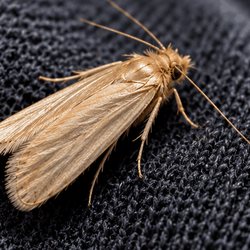
- Carpet moth — small, buff or mottled, tends to run and flutter low rather than fly to a light. Damage on floor-level textiles
- Clothes moth — very similar, and honestly the treatment overlaps. Damage in wardrobes and drawers
- Pantry or food moth — found near cupboards, flour, rice, cereal and dried pet food. Nothing to do with carpets and treating the floor will do nothing at all
- Silverfish — fast, silver, wingless. Different animal
- Woodworm — small round holes in timber, not fibre
If the moths are concentrated near a kitchen cupboard rather than near the floor of a bedroom, stop and check the dried goods before you do anything else.
Confirming It Before You Spend
- Photograph a moth if you can, and anything you find in the carpet
- Note WHERE in the house they are — room, and height
- Lift a corner of carpet in a wardrobe and look at the underlay
- Check the kitchen cupboards for the food-moth version
- Mark any bare patch in pencil with the date, and look again in a month
Treatment starts from £220. If you are not certain what you have, say so when you call — identifying it correctly is the part that decides whether anything else works.
Carpet moths in Bracknell? Pest Services Berkshire treats carpet moths from £220. Carpet Moth Control in Bracknell has the full detail, or call 0118 336 1366.