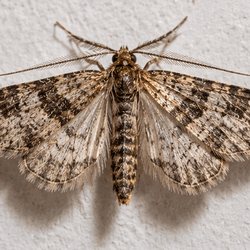
Bracknell was designated a New Town in 1949 and built out over the decades that followed, which means a great deal of its housing is postwar or later. That matters for one specific reason: much of it is carpeted in synthetic fibre, and carpet moth larvae cannot feed on synthetic fibre.
So in Bracknell the first useful question is not how to treat carpet moths. It is whether you have them at all — because a good proportion of the small moths people find indoors here are something else entirely, and the treatment is different. Pest Services Berkshire treats carpet moths from £220 and will tell you if that is not what you have.
First: What Is On Your Floor?
Carpet moth larvae feed on keratin, the protein in animal fibres. Wool is the common one. Nylon, polypropylene and polyester are not food, and an infestation cannot sustain itself on them.
Wool or a wool-rich blend. Feels soft and slightly springy, recovers slowly when compressed, and singed fibres smell of burnt hair. Vulnerable.
Polypropylene. Common in later housing and rentals. Feels harder, resists staining, and singed fibres melt into a bead and smell chemical. Not food.
Wool-mix. Often 80/20 wool and nylon. Vulnerable — the wool content is enough.
The label or the offcut in the loft is the quickest answer if you have one.
The catch, and it is a real one. A synthetic carpet is not food, but the UNDERLAY beneath it may be, and so may a wool rug on top of it. Plenty of Bracknell houses have synthetic carpet over felt-based underlay containing animal fibre. So "my carpet is synthetic" rules out the carpet and not the room.
Second: What Kind of Moth Is It?
Several small moths turn up in houses and only some of them eat textiles. Getting this right saves you a treatment you do not need.
Textile moths — carpet and clothes moths
Small, buff or golden, and notably reluctant to fly. They tend to scuttle, run into a corner, or make a short erratic flight close to the floor. They are not attracted to lights and you will not find them circling a lampshade. If you disturb one from a carpet edge and it runs rather than flies, that is the group.
Food moths, usually pantry or Indian meal moths
Similar size, often with a two-tone banded wing, and found around kitchen cupboards rather than floors. Their larvae are in dry goods — flour, cereal, rice, birdseed, dried pet food — not in your carpet. If the moths are in the kitchen, check the cupboards before the floor.
Outdoor moths that came in
Larger, stronger fliers, drawn to lights and to open windows on warm evenings. They are not eating anything indoors.
The Test That Settles It
Moths are the symptom. Damage and larvae are the diagnosis.
Move something heavy — a wardrobe, a bed, a sofa — and look at the carpet underneath it
Look along the carpet edge where it meets the skirting, all the way round the room
Look at the underside of any rug
Look for irregular thinning or bald patches, fine webbing, small cream larvae, or shed cases
If there is no damage and no larvae anywhere, you probably do not have carpet moths whatever is flying about
That sequence takes twenty minutes and it is worth doing before spending anything, here more than most places.
If It Is Carpet Moths
Then the wool is somewhere, and finding it is the job. In a Bracknell house that is usually a rug, the underlay, a wool-rich carpet in one older room, or stored woollens rather than the wall-to-wall flooring.
The larvae are what feeds; the adults do not. That is why killing visible moths produces a lull rather than an end, and why the problem returns a few weeks later from wherever the larvae actually are.
Where to Look Once You Know
Under beds, sofas, wardrobes and chests of drawers
Along carpet edges and against skirting boards
Beneath rugs, and on their undersides
In fitted and built-in wardrobes, at the back and the base
In spare rooms and anywhere used less often
Wherever wool clothing, blankets or throws are stored
Why DIY Treatment Often Disappoints
It is applied on the assumption the carpet is the food source, when the underlay or a rug may be
Traps catch adult males and monitor; they do not remove larvae
Open floor gets treated and edges and under-furniture areas do not
Adult sightings fall naturally between generations, which reads as success
Sometimes it is applied to a problem that was never carpet moths at all
Professional Treatment From £220
Confirming carpet moths rather than food or outdoor moths
Establishing what the food source actually is — carpet, underlay, rug or stored textiles
Establishing which rooms and areas are involved
Preparing the affected areas as required
Applying the appropriate professional treatment
Cleaning and prevention advice
Follow-up where the extent of activity warrants it
Treatment starts from £220 and depends on the rooms involved. If we look and it is not carpet moths, we will tell you that and what it is instead.
Landlords, Agents and Commercial Premises
We take enquiries from landlords, tenants, letting agents and property managers across Bracknell, and from businesses and managed premises with carpets, rugs or stored textiles.
Questions
Carpet Moth FAQs — Bracknell
My carpet is synthetic. Can I still have carpet moths?
The carpet itself is not food, but the underlay beneath it may contain animal fibre, and a wool rug on top of it certainly is. Synthetic carpet rules out the carpet, not the room.
How do I tell a carpet moth from a pantry moth?
Location and behaviour. Textile moths are found near floors, dislike flying and are not drawn to lights. Pantry moths are found around kitchen cupboards and their larvae are in dry food, not carpet.
How can I tell whether my carpet is wool?
Wool feels soft and springy and recovers slowly when pressed. Polypropylene feels harder. A singed fibre is decisive: wool smells of burnt hair, synthetic melts into a bead. A label or a loft offcut is quicker.
There are moths but no damage anywhere. What now?
Then it is probably not carpet moths. Check kitchen cupboards for food moths, and consider whether they are simply coming in from outside. It is worth ruling out before paying for a treatment.
How much is treatment in Bracknell?
From £220, depending on the rooms involved. If we assess it and it turns out not to be carpet moths, we will say so.
Advice
Carpet Moth Guides for Bracknell
Five guides written for Bracknell. We publish these in batches
rather than all at once, so some are still being written —
those are marked rather than linked to a page that is not there.
Treatment starts from £220. Tell us which rooms are affected and
what you have found — moths, larvae, webbing or damage —
and we will come back to you.