The Short Version of the Difference
- Carpet moth — larvae feed on floor-level textiles: carpet, underlay, rugs, the underside of upholstery. Damage is on the floor and usually under something
- Clothes moth — larvae feed on stored clothing and textiles: wool coats and jumpers, blankets, felt. Damage is in wardrobes and drawers
- Both eat keratin, the protein in animal fibre. Neither touches polyester, nylon or polypropylene
- Both avoid light and movement, so both are found where nothing goes
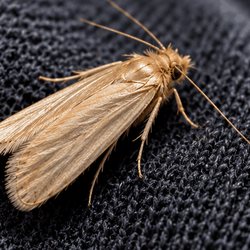
The adults are small, buff to mottled, and tend to run or flutter low rather than fly to a light. Trying to tell them apart by looking at the insect is not a realistic exercise for anyone without a lens.
The Useful Difference in a Shared Building: How They Arrive
This is the question that actually changes what you do next.
A clothes moth problem is almost always yours
It arrives with clothing and textiles. A coat from a charity shop, a box out of storage, a wool blanket, a suitcase back from somewhere. It comes through your front door in something you carried, and it lives in your wardrobe.
It does not travel well between flats, because the food is inside closed furniture rather than laid across the building.
A carpet moth problem may well not be
It lives on continuous floor covering, and in a converted house the floor covering is continuous. Communal stair carpet runs past every door. Floor and ceiling voids often run between flats. That is a network, and a population on it supplies everybody.
How To Tell Which You Have, In Practice
- Where is the damage? Floor level and under furniture, or inside a wardrobe among hanging clothes
- Where are the adults? Running low along a skirting or the hallway floor, or coming out when you open a wardrobe
- What is the damaged item? Carpet, underlay and rug against coat, jumper and blanket
- Did something come in recently? A box out of storage or a second-hand coat points at clothes moth
- Is anybody else in the building affected? If yes, it is far more likely to be carpet moth
It is often both. A long-running carpet moth population in the flooring will eventually reach the wardrobes, and the reverse happens too. Finding damage in both places does not mean you have misidentified anything — it means it has been going a while.
Why It Changes the Response
- Clothes moth: the work is in the wardrobes and drawers, and the textiles themselves. Whether the neighbours have it is largely irrelevant
- Carpet moth: the work is the flooring, and the question of the common parts and the neighbouring flats is central. Treating your flat alone may not hold
- Both: treat the flooring and the stored textiles together, or each will reseed the other
Treatment starts from £220. If you are not sure which you have, describe where the damage is rather than what the moth looked like — the location answers it and the insect usually does not.
Carpet moths in Slough? Pest Services Berkshire treats carpet moths from £220. Carpet Moth Control in Slough has the full detail, or call 0118 336 1366.