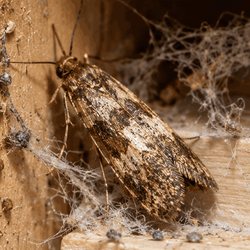
What They Do Not Do
- They do not bite. Neither the adults nor the larvae. There is no mouthpart involved that could
- They do not sting
- They do not feed on people or animals. Larvae eat keratin in fibre — wool, silk, feather, fur. They are not parasites and they have no interest in a living host
- They do not transmit disease to people or pets
- They do not damage the fabric of a building — no timber, no wiring, no plaster
- Adults do not feed at all. They live a few weeks and exist to mate and lay
If something is biting you, it is not this. Bites point at something else entirely — fleas, bed bugs or mites — and that is a different problem with a different treatment. Worth saying plainly, because people sometimes put the two together and treat the wrong thing for months.
The Real Qualifications
Debris in a heavy, long-running infestation
A large population produces shed larval skins, silk and frass, which accumulate in the carpet. In a heavy case that adds to household dust, and some people with existing asthma or allergies find dusty environments aggravating. That is a general dust point rather than anything specific to moths.
Carpet beetle larvae are a different matter
Worth separating, because people conflate them. Carpet beetle larvae — small, brown, distinctly bristly, often called woolly bears — carry fine hairs that can cause skin irritation in some people. Carpet moth larvae are smooth, cream, and do not. If somebody in the house has unexplained skin irritation and you have been assuming moths, it is worth checking which insect you actually have.
Anything affecting a person is a medical question
We are pest controllers. If anyone in the household has a skin reaction or a breathing problem they are worried about, that is a pharmacist or GP question and it should go to one rather than to us. We can tell you what insect is in the house; we cannot tell you what caused a symptom.
Pets
- Carpet moths are not parasitic and pose no direct risk to a dog, cat or other pet
- A pet that eats a larva has not been poisoned — it is fibre and protein
- Pet bedding, particularly wool blankets, IS at risk as a material, so check it
- Shed pet hair in undisturbed corners is genuine food for the larvae, so it is worth vacuuming the edges rather than only the middle
Treatment Safety, Which Is the Question Underneath
Usually what people are really asking is whether having the house treated is safe with children or animals in it. The honest answer is that it is routine, and it comes with instructions that exist for a reason.
- People and pets out of the treated rooms while the work is done, and for the exclusion period given on the day
- Fish tanks covered and pumps switched off; birds and small animals out of the property
- Ventilate the rooms after the exclusion period
- Do not vacuum for the period specified, then vacuum normally
- Tell us beforehand if anyone in the household is pregnant, an infant, or has a respiratory condition, so the aftercare advice fits
- Ask what is being used and ask for the aftercare in writing if you want it
Treatment starts from £220. If you have specific concerns about children, pets or a health condition, raise them at the booking rather than on the day — it is easier to plan around than to work around.
Carpet moths in Ascot? Pest Services Berkshire treats carpet moths from £220. Carpet Moth Control in Ascot has the full detail, or call 0118 336 1366.