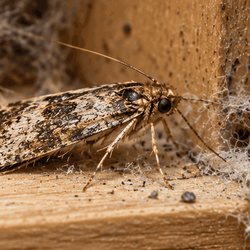
The Arrival, and Then the Building
Two separate questions that get treated as one. How they got in is usually mundane. Why they thrived is structural, and it is the half that explains why one house gets this repeatedly and the house next door never does.
How They Get In
- Second-hand rugs and upholstered furniture
- Belongings from a previous address, or out of storage
- Items left by previous occupants
- Old felt underlay that was already down
- Birds nesting in the eaves or an unused chimney
- Occasionally, an adult through an open window — the least likely route and the one people assume
Why an Older House Suits Them
- Suspended timber floors. The void beneath is dark, still, ventilated and full of accumulated fibre, hair and dust. It runs the footprint of the house and nothing ever disturbs it
- Gaps between floorboards. Decades of wool fibre, pet hair and debris have fallen into them, and it is all edible
- Ceiling voids between storeys, connected to the floor above
- A staircase that is never lifted. The hardest part of a house to recarpet, so it is usually the oldest flooring in the building, and the outer thirds of every tread are untouched
- Deep skirtings with a gap behind them
- Unused chimney breasts and disused flues, which collect nesting material
- Fitted alcove cupboards beside a chimney breast, dark and never emptied to the back
- Three floors, which means more rooms than a household actively uses and at least one that is effectively storage
The consequence worth understanding. In a house like this the infestation may not be in anything you own. It can be in the floor void, the board gaps or the flue, feeding on material that has been accumulating since before you moved in. That is why treating the visible carpet sometimes does not settle it.
What Does Not Cause Them
- Not cleanliness. They need stillness, not dirt, and an immaculate house with wool carpet and heavy furniture is a good habitat
- Not food waste — that is a pantry moth, near kitchen cupboards
- Not damp in itself, though damp and undisturbed corners coincide
- Not the age of the house as such, but the features above, which older houses tend to have
What Can Be Changed, and What Cannot
Being straight about this saves money.
- Can change: what is stored where, how often things are moved, how the edges are vacuumed, whether a flue is capped, whether stored textiles are sealed
- Can be treated: floor voids and board gaps can be reached, and a chimney breast and alcove cupboards can be included in a scope
- Cannot change: the fact that the house has a suspended floor, three storeys and a staircase that will not be recarpeted this year
The realistic aim in a house like this is not to make the building unsuitable. It is to clear what is there, include the structural places in the scope rather than only the visible carpet, and check once a year.
Treatment starts from £220. Tell us the age and layout of the house, whether the floors are suspended timber, and whether there are open flues or alcove cupboards — it changes what we look at.
Carpet moths in Caversham? Pest Services Berkshire treats carpet moths from £220. Carpet Moth Control in Caversham has the full detail, or call 0118 336 1366.