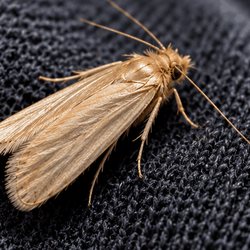
The Roof Space
The most productive place to look in a house that keeps getting this, and the least often looked at.
- The edges, where the roof meets the wall plate — nesting material collects there
- Old bird nests, feathers and down
- Rodent nests and remains
- Accumulated dead insects, which build up over years
- Boxed textiles, old curtains, blankets and carpet offcuts
- Insulation, where it is a wool or hair-based type
L
o
o
k
f
r
o
m
t
h
e
h
a
t
c
h
w
i
t
h
a
t
o
r
c
h
a
n
d
g
o
n
o
f
u
r
t
h
e
r
.
R
o
o
f
s
p
a
c
e
s
h
a
v
e
u
n
b
o
a
r
d
e
d
j
o
i
s
t
s
,
l
o
w
c
l
e
a
r
a
n
c
e
a
n
d
n
o
l
i
g
h
t
,
a
n
d
a
c
e
i
l
i
n
g
w
i
l
l
n
o
t
h
o
l
d
a
p
e
r
s
o
n
.
N
o
b
o
d
y
s
h
o
u
l
d
b
e
g
o
i
n
g
o
n
t
o
a
r
o
o
f
o
r
i
n
t
o
t
h
e
e
a
v
e
s
t
o
c
h
e
c
k
f
o
r
m
o
t
h
s
.
The Eaves and Roofline
Not somewhere to inspect yourself, but somewhere to look at from the ground with binoculars. Nesting material at a soffit, a gap under a barge board, a slipped tile at the roof edge or birds using the same point repeatedly all point to the same thing.
An Unused Chimney
A capped-off or disused flue with no cowl is a straight route in, and jackdaw nesting material can fill several feet of one. That is a large quantity of feathers and animal hair sitting inside a wall of the house, immediately behind a bedroom.
Outbuildings, Garages and Sheds
- Old carpet and underlay stored flat or rolled
- Camping gear, sleeping bags and blankets
- Boxed clothing and bedding
- Upholstered furniture waiting to go somewhere
- Animal bedding, feed and hay
- Anything wool or feather that has been out there over a winter
Cold does not deal with this. Development slows in an unheated space and resumes when it warms up, which is exactly why an outbuilding produces its population in spring.
Inside the House, In Order
- The room below the loft hatch, and the landing
- Under the heaviest furniture in each upstairs room
- The carpet edge against the skirting, all the way round
- The airing cupboard, among stored bedding
- Wardrobes, at the shoulders of wool garments
- Under rugs, and on their undersides
- Stairs, at the outer ends of the treads
How To Check Without Taking Risks
- Loft: from the hatch, with a torch, and no further
- Roofline: from the ground, with binoculars
- Chimney: from the ground, looking at the pot
- Outbuildings: unroll and look inside anything textile
- Rooms: move one heavy item at a time and look at both surfaces
- Photograph what you find rather than clearing it out
Treatment starts from £220. Tell us what you found and where, including anything you could only see from the ground — it is usually the outside observations that explain the inside problem.
Carpet moths in Crowthorne? Pest Services Berkshire treats carpet moths from £220. Carpet Moth Control in Crowthorne has the full detail, or call 0118 336 1366.