Four Things That Make a Bald Patch
- Traffic wear. Gradual, in a path, worst at doorways and the turn at the bottom of a staircase
- Furniture crush. A flattened rectangle with sharp edges, matching a foot or a base. The pile is compressed rather than missing
- Sunlight and age. Fading and brittleness, usually in a window's footprint, with the pile thinning evenly
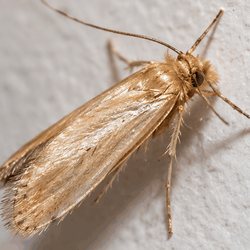
- Moth larvae. Irregular, patchy, with the pile grazed away and the backing showing through in places
The first three are the carpet's history. The fourth is a live problem, and it is the only one that keeps getting worse if nothing is done.
The Test That Separates Them
Position, before anything else.
- Wear happens where people walk. Doorways, the middle of a room, the line from door to fireplace, the outside of a stair turn
- Moth damage happens where they do not. Under the bed, behind the wardrobe, along the skirting, under a rug, in the corner of a room nobody uses
- A bald patch in the middle of a busy room is almost certainly wear
- A bald patch under something is almost certainly not
The edge tells you the rest. A worn patch fades out gradually into sound carpet. Moth damage has a ragged, uneven boundary and often several separate patches near each other rather than one large one.
What Else To Look For In the Patch Itself
- Fine silky webbing, sometimes with grains of debris caught in it. Wear does not produce this
- A sandy or gritty debris in and around the patch
- Small cream larvae, often inside a case the colour of the carpet, which is why they are easy to miss
- Loose fibre lying free rather than compacted down
- Backing visible in patches rather than evenly
On a Rug, Which Is Different
In a period house a good deal of the wool is in rugs rather than fitted carpet, and rugs show this differently.
- Turn it over. Most rug damage starts on the underside, against the floor, where it is dark and still
- Look for the foundation showing. On a hand-knotted rug the larvae take the wool pile and leave the cotton or wool warp and weft standing — a bald area where you can see the grid of the foundation
- Check the parts under furniture, and the section that sits under a sofa or a cabinet
- Check the fringe and the selvedge, if either is wool
- Look at the floor underneath, which is often where the debris is
A rug that has been in the same position for years, with a bald area on the covered part and none on the exposed part, is not worn. It has been eaten.
The Pencil Test, Which Settles It
- Photograph the patch with something for scale beside it
- Mark the edge in pencil, or lay a line of pins along the boundary
- Write the date
- Look again in four to six weeks
- If it has grown past the mark, something is feeding. If it has not, it is history
Treatment starts from £220. If you are unsure, photograph it and mark it before you do anything else — it costs nothing and it answers the question better than any description.
Carpet moths in Windsor? Pest Services Berkshire treats carpet moths from £220. Carpet Moth Control in Windsor has the full detail, or call 0118 336 1366.