
The Noise
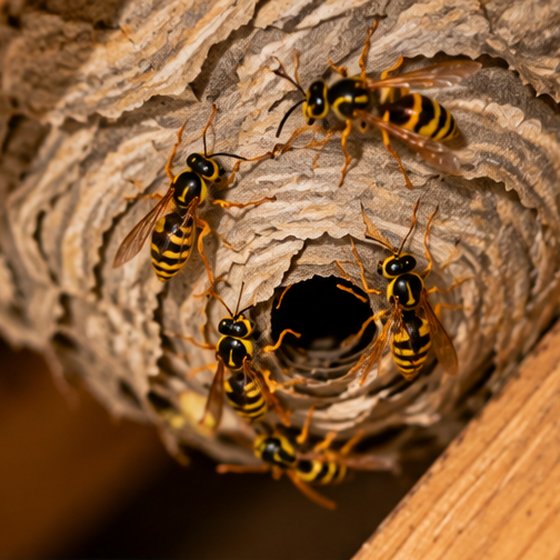
A large colony in a quiet roof is audible from the room below. People describe it as a dry rustling or a faint crackling, more like paper being handled than anything buzzing, and it is loudest on a warm afternoon when the colony is busiest.
It is worth distinguishing from the alternatives, because the sound tells you a good deal. Scratching and scurrying, particularly at dusk and dawn, is rodents. Heavy thumping and dragging is squirrels. A steady dry rustle that rises and falls with the temperature is a wasp colony working.
Single Wasps Indoors, Day After Day
One wasp in the kitchen in August means nothing. The same bedroom producing two or three a day for a week is a different signal entirely, and it usually means a nest in the roof void or a wall with individuals finding their way in through a gap round a light fitting, a loft hatch, a downlighter or the top of a boxed-in pipe.
The giveaway is that they are always at the window. A wasp that has come in from outside knows the way back out; one that has come down from a nest inside the structure does not, so it heads for the light and stays there. Finding several dead ones on the same windowsill is the same sign.
Staining, and the Rare Ceiling
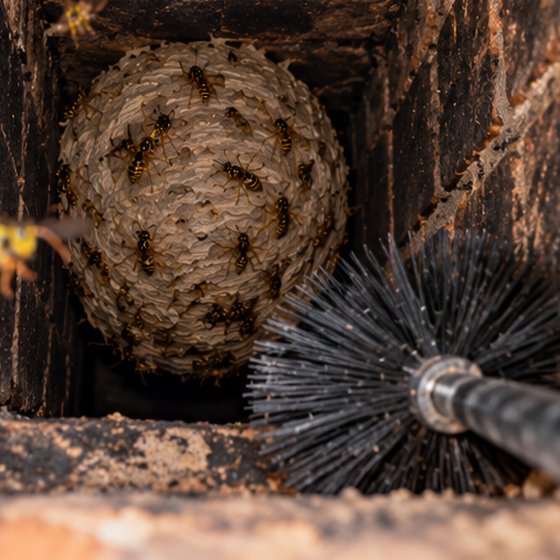
A very large nest against a ceiling can produce a damp brown stain over time. This is uncommon and it is a late sign rather than an early one, but it does happen with a big colony directly above plasterboard.
Far more common is a stain nobody connects to wasps at all, in a bedroom with an unexplained mark on the ceiling and a papery noise that has been going on for a fortnight. The two things are usually the same problem.
Why It Feels Sudden
Because of how a colony grows. A single queen starts a nest the size of a walnut in April and raises the first few workers herself. Through May and June the colony is a few dozen. It is July before the numbers really climb, and August and September before it is at its largest, with the most wasps coming and going and the most noise.
So the nest has been there for four months by the time anybody notices it, and the thing that changed in August was not the nest arriving but the colony reaching a size that is impossible to ignore.
Which means April and May are the cheap months to notice one. A nest found early is a smaller colony and a far less eventful treatment. The price is the same either way; the fortnight before anyone gets stung is not.