
Why They Change in August
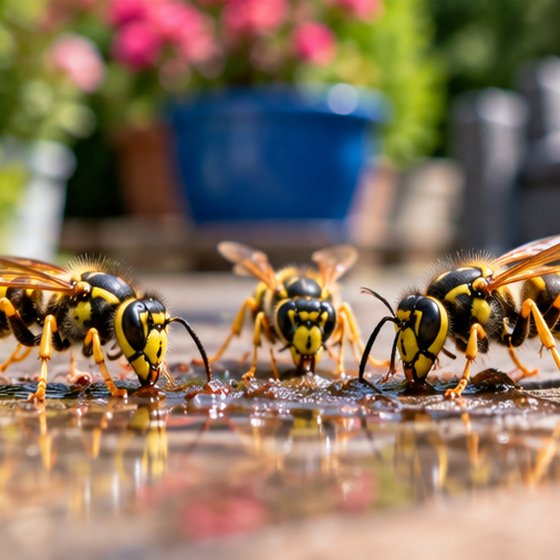
For most of the summer a colony is busy. Workers spend the season hunting insects to feed the larvae, and the larvae feed the workers back with a sugary secretion. It is a closed loop, and while it is running the wasps have a job and no reason to be anywhere near your drink.
In late summer the queen stops laying, the larvae mature, and the loop breaks. Several thousand workers suddenly have nothing to do and no sugar supply. They go looking, and what they find is fallen fruit, bins, ice cream and anything in a glass. The nuisance people associate with wasps is almost entirely this fortnight or two at the end of the colony's life.
Why They Seem Bolder
They are bolder. A late-season worker is not defending a nest and not provisioning one; it is foraging for itself, it is slower, and it does not move off when waved at. That is what people describe as aggression, and it is really indifference — which is worse, because it is what gets one trapped against a sleeve.
The colony itself is also at its largest of the year in August and September, so a nest that was unnoticed in June is now producing the maximum number of these wasps a day.
Does It Sort Itself Out?
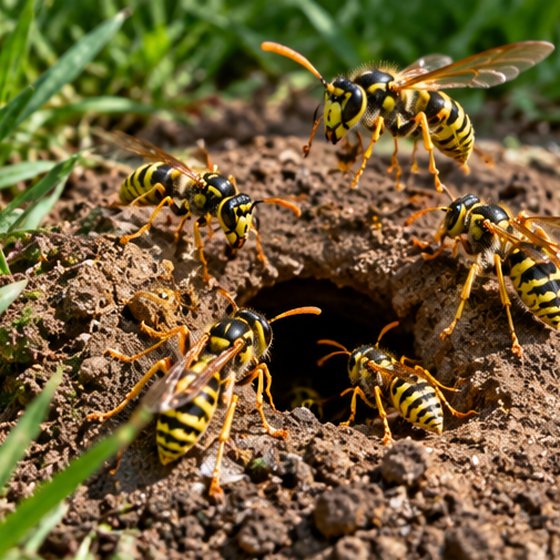
Eventually, yes. The colony dies off with the first hard weather and only the new queens survive, hibernating somewhere else entirely. Waiting is a legitimate choice if the nest is somewhere nobody goes.
It is a poor choice if the nest is over a doorway, near where people eat, at a property with children, or anywhere someone with a sting allergy lives. Those are the weeks when the nest produces most wasps, and there are usually six to eight of them left to run.
Keeping Them Off the Table Meanwhile
- Keep bin lids shut and the bin away from the door
- Clear fallen fruit, which is the biggest draw in a garden
- Cover drinks outside — and never drink from a can that has been standing
- Rinse recycling before it goes out
- Do not swat at one near you: a crushed wasp releases an alarm signal that brings others
None of that deals with a nest. It reduces what is on offer, which helps at a barbecue and does nothing at all about several thousand wasps in the roof.