
Getting In Through a Wall
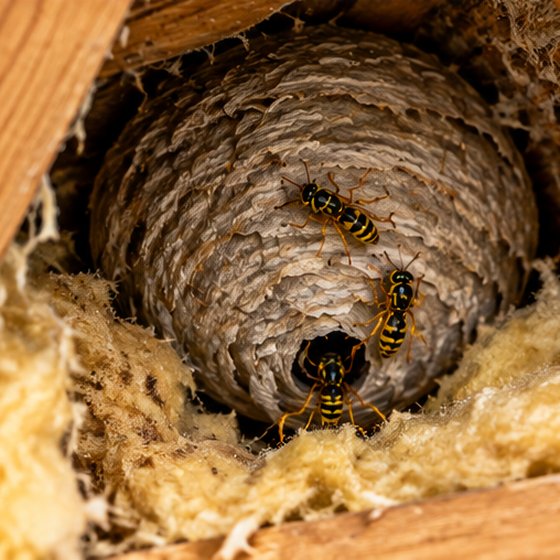
Cavity walls are ventilated by design, and every one of those designed openings is wide enough for a wasp. Airbricks, weep vents at the base of a wall, the gap round a waste pipe or a flue, an eroded mortar joint, the slot behind a cavity closer at a window reveal — all of them lead into a dry sheltered void the full height of the house.
Once inside, the colony builds against the inner leaf or the insulation batts. It can sit at first-floor level while the wasps are going in at knee height, which is why the entrance and the nest are so often nowhere near each other.
Why Sealing It Is the Worst Option
A sealed cavity nest goes inward. Wasps blocked out of their entrance do not give up and do not die; they chew. From a cavity the nearest soft material is very often the plaster or the plasterboard of the room on the other side, and several thousand wasps coming through a bedroom wall is a genuinely worse afternoon than the nest was.
The same goes for expanding foam into an airbrick, which also blocks the ventilation the wall needs. The entrance stays open until the colony is dead. After that it can be dealt with properly.
Treating a Nest You Cannot See or Reach
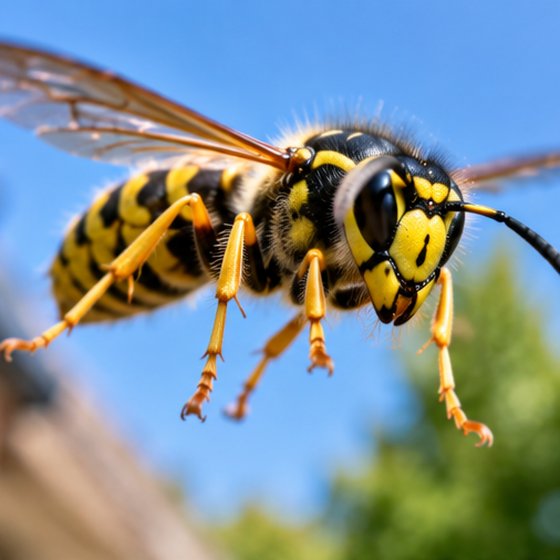
This is where entrance treatment earns its keep. Nothing has to be opened, no brick is removed and no hole is drilled into the cavity. The treatment is placed at the point the wasps are using and they carry it into the void themselves, which reaches a nest that no equipment could.
It also means the nest is never found, and does not need to be. It stays in the cavity, dries out, and breaks down over time. A dead wasp nest in a wall is inert — it does not smell, it does not attract anything else, and it is not a reason to open the wall up.
Proofing, in the Right Order
Once the season is over, an airbrick can be fitted with a fine stainless mesh cover that keeps insects out while leaving the ventilation working, and eroded mortar joints can be repointed. Both are sensible. Both are jobs for autumn or winter, not for August with a live colony behind them.