
Why Older Roofs Attract Them
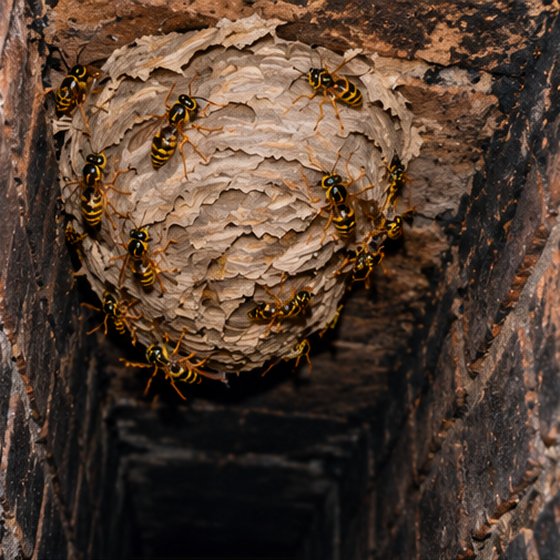
A wasp queen is looking for a dry, sheltered void with a small entrance, and an older building is full of them. Lime mortar erodes into gaps a wasp can walk through. Hand-made tiles sit less tightly than machine-made ones. Timber shrinks away from masonry. Roof voids are larger, less insulated and often not felted at all.
None of that is disrepair — it is how the building was built. But it means an older property can host a nest with no obvious defect anywhere, and it means sealing every possible entrance afterwards is not realistic in the way it might be on a modern estate.
Treating Without Damaging Anything
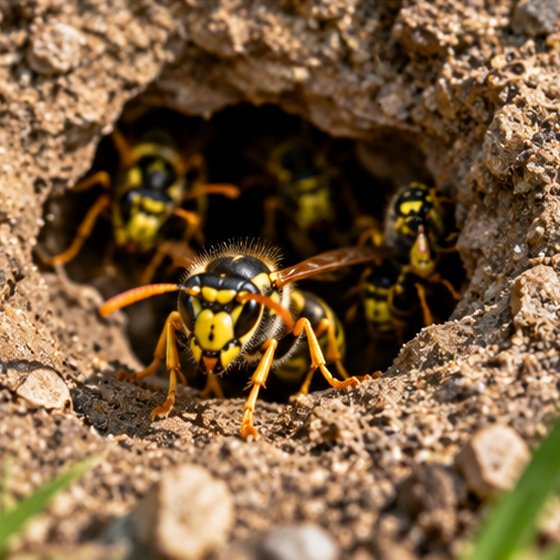
The treatment itself is the same wherever the nest is: a dust or spray at the entrance, carried inside by the wasps. Nothing is drilled, nothing is opened, and the nest is not cut out. On an old building that is the point — it is the least invasive option available and it does not touch the fabric.
Where care is needed is with what the treatment lands on. Soft lime render, old limewash, exposed oak and leaded glazing all mark more easily than modern materials. Applied at the entrance rather than sprayed across an elevation, that is a manageable problem, and it is worth telling us what the wall is made of before we arrive.
Listed Buildings and Conservation Areas
Treating a wasp nest is not work that needs consent. Nothing is altered: no hole is made, no material is removed, and the nest is left in place. Consent becomes relevant only if somebody then wants to proof the building afterwards — replacing mortar, fitting mesh behind a soffit, changing a vent.
If proofing is in prospect it is worth raising with the conservation officer before anybody starts, because the acceptable solution on a listed elevation is usually not the one a builder would reach for first.
Roof Voids Without Felt
Many older roofs have no sarking felt, so the underside of the tiles is the inside of the void. A nest there is often visible from the loft hatch and is frequently far bigger than the entrance suggests, because there is nothing to limit its growth.
Do not go up for a closer look. A loft nest is approached along joists in poor light with the colony between you and the hatch. Most of the loft stings we hear about happened during an inspection, not a treatment.