Report It in Writing, Today
Whatever else happens, the first move for a tenant is to tell the landlord or agent in writing and keep a copy. A text or an email is enough. It takes two minutes and it is the thing that settles the argument later about who knew what and when.
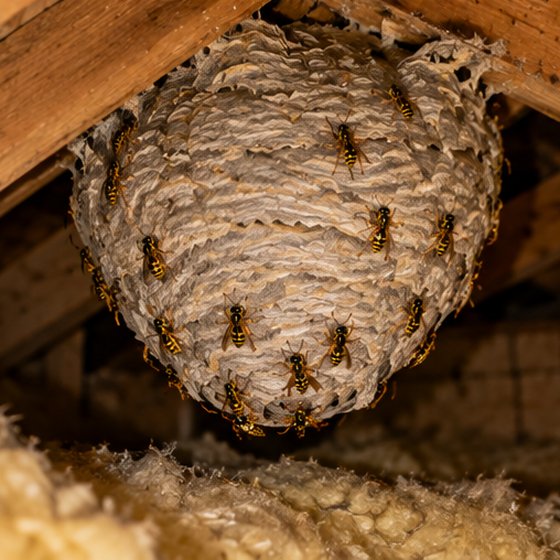
Include where the wasps are going in, how long it has been going on, and whether anybody in the house has been stung or has a known allergy. That last point tends to move a slow agent faster than anything else in the message.
Who Normally Pays
Usually the landlord. A nest in the structure of the building — the roof void, a wall cavity, a soffit, a chimney — is a matter for whoever owns the structure, not for whoever is renting the rooms. Most tenancy agreements say so in some form, and most agents accept it without argument.
It gets less clear cut where a nest is in something the tenant controls and has let get out of hand — a shed full of rubbish, say. In practice those arguments are rare and they are not worth having while a colony is live above a bedroom.
Student and Shared Houses
The particular problem in a shared house is that nobody quite owns the problem. The nest is over a room one person sleeps in, the entrance is at the back of a house four people rent, and everyone assumes somebody else has reported it. Weeks pass.
One person reporting it in writing on behalf of the house solves that. If the house is let by the room rather than jointly, it is worth saying so in the message, because an agent handles those differently.
If Nothing Happens
A tenant can arrange the treatment themselves and seek the cost back, and for ninety pounds against a live nest over a bedroom that is often the pragmatic answer. Keep the invoice and the written report showing it was raised first.
We will invoice a landlord or agent directly if you tell us who they are when you book. It is the commonest arrangement on rented property and it avoids the tenant being out of pocket at all.