How You Know It Is Up There
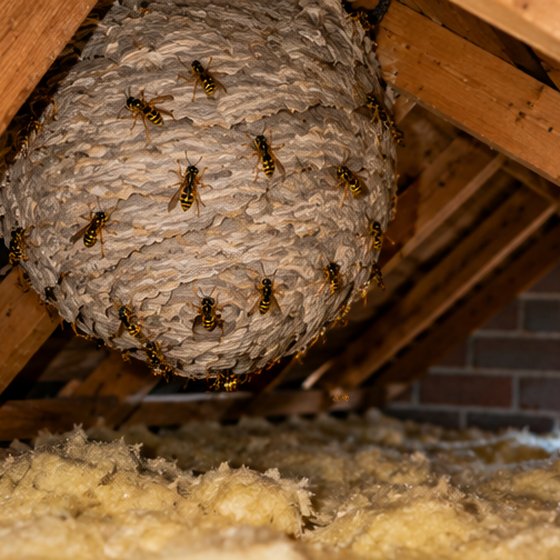
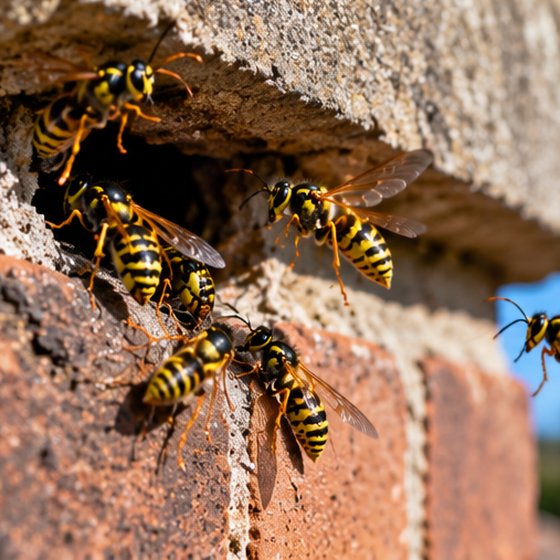
Three signs, usually in this order. Wasps going in and out at a fixed point along the eaves or a gable. A faint dry rustling or crackling from the ceiling on a warm afternoon, which is the colony working rather than anything moving about. And single wasps appearing in an upstairs room, often at a window, having come down through a gap round a light fitting or a loft hatch.
The noise surprises people. A big colony in a quiet loft is genuinely audible from the bedroom below, and it is usually described as papery rather than buzzing.
Why Not to Go Up and Look
A loft nest is approached across joists, in poor light, stooping, with the colony between you and the hatch. If it reacts there is nowhere to go and no quick way down. Most of the serious loft stings we hear about happened during a look, not a treatment.
You do not need to see it. The entrance is on the outside, and that is what gets treated. Where we do need loft access it is to confirm the position, not to reach the nest.
Insulation, Wiring and the Nest Itself
Wasps build with chewed wood pulp, not with your insulation, so a nest in a loft is sitting on the insulation rather than eating it. They do not gnaw cable the way rodents do. The damage a loft nest does is mostly staining on a ceiling below it in a big colony, and that is uncommon.
Once the colony is dead the nest is inert. It can be left exactly where it is. It will dry out and break up, and because wasps never re-use an old nest it will not be occupied again.
Taking It Out, If You Want It Out
Some people want the nest gone, particularly if it is over a bedroom or against a water tank. Once it is dead that is a straightforward job and can be done at the time or later. It is not necessary, and it is not included in the treatment price — but we will tell you honestly whether it is worth doing in your loft rather than assuming.
What is worth doing is looking at how they got in, once the season is over. A gap at a soffit end or a lifted tile that suited a queen this year will suit one next year.