
The Nest Itself Is Done
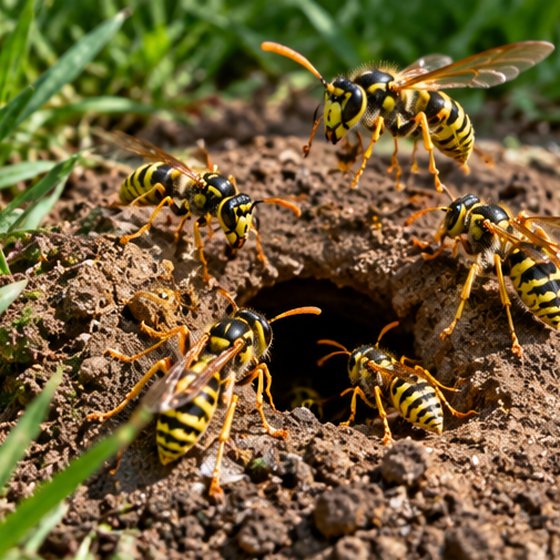
A wasp colony lives for a single season. The workers and the old queen die off with the cold, the new queens leave to hibernate somewhere entirely different, and the nest is never occupied again — not the following spring, not ever. An old nest in a loft is a dry paper shell and nothing more.
So the reassurance is real: whatever was treated will not come back to life. Anything that appears in the same place next year is a new queen making the same choice, which is a different problem with a different answer.
Why the Same House, Though
Because the feature that suited a queen once still suits one. A gap at a soffit end, a lifted tile, an unmeshed airbrick, a hole in the render, a shed with a lifted felt lap — a queen looking for a site in April assesses the building the same way the last one did and reaches the same conclusion.
That is why some properties get a nest most years and the one next door never does. It is rarely luck. It is nearly always a specific, findable gap.
What Is Worth Doing Over Winter
- Repoint eroded mortar joints, particularly at the eaves
- Fit fine stainless mesh covers to airbricks, which keeps insects out and leaves the ventilation working
- Close gaps at soffit ends and at dry-verge units, without blocking designed ventilation
- Reseat lifted or slipped tiles and check the ridge
- Refix lifted felt on shed and garage roofs
- Seal round waste pipes and flues where they pass through a wall
All of it is autumn or winter work, done once a colony is finished. None of it should be attempted with a live nest behind it, for the reason that recurs on every page here: blocked wasps chew inward.
What Does Not Help
Decoy nests, ultrasonic devices and the various things sold as wasp deterrents do not have evidence behind them worth spending money on. A queen choosing a site is looking for a cavity with a small entrance, and a plastic bag hanging from a fascia does not change whether that cavity exists.
The only prevention that reliably works is closing the way in. Everything else is a product, not a solution.