Why Outbuildings Suit Them
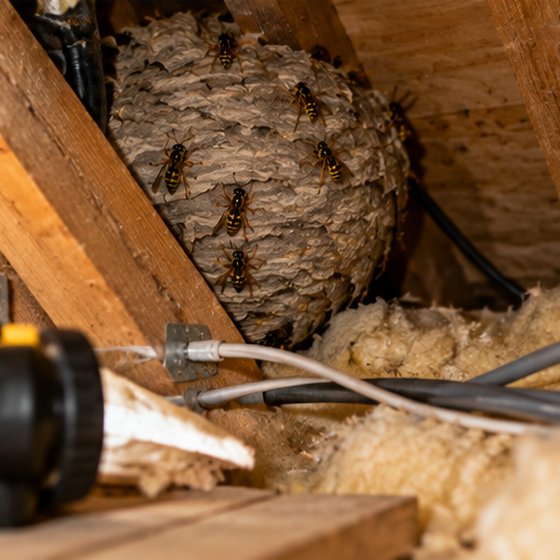
An outbuilding is quiet, dry, sheltered and largely undisturbed, which is precisely what a queen looks for in April. A felted shed roof, the gap between a garage ceiling and the tiles, the void in a stable roof, the inside of a disused chimney on an old outbuilding — all of them are better than most of what a house offers.
The difference from a house is that nobody is there to notice it growing. A colony can go from a golf ball in May to the size of a football by August in a shed that was opened twice in between.
Opening the Door on One
The moment of risk is the door. A colony inside an enclosed building reacts to the door being opened and to the light and vibration that come with it, and the person opening it is standing in the only exit.
If you open a door and find a nest: back out, shut the door and leave it shut. Do not go back for whatever you came for, and do not open it again to show somebody. Everything in there will still be there tomorrow.
What Is Stored in There
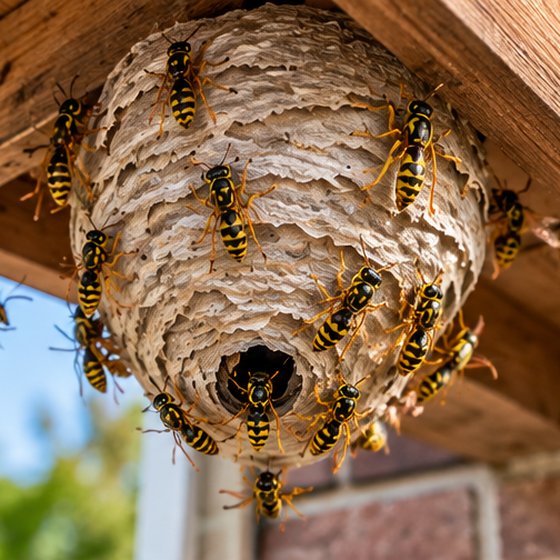
This is the part worth telling us before the visit. Sheds and garages hold things treatment should not land on — open animal feed, bedding, garden produce, a freezer, pet or livestock housing, fishing or camping kit. Stables in particular need planning around, because horses cannot simply be asked to wait outside.
Knowing what is in the building changes where and how the treatment is applied, and occasionally changes the order of the job. It is a two-sentence conversation on the phone and it avoids an awkward one on site.
Afterwards, and Next Year
Once the colony is dead the nest can stay where it is. In a shed roof it will dry out and fall apart, and it will not be reused. If it is directly over a bench or a stored item it is easy enough to take down once it is inert.
The gap that let the queen in is the thing worth looking at over winter. A felt lap, a missing board, a gap at the eaves of a stable — closed in February, that is one fewer outbuilding on offer in April.