
Out of the House Is Not Out of the Way
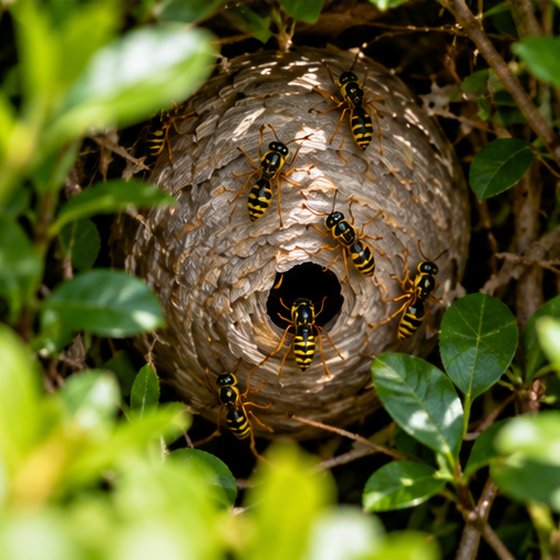
A garden nest feels less urgent than one in the roof, and for a few weeks it is. The problem is that gardens get used. The nest in the hedge is fine until the hedge needs cutting; the one under the decking is fine until somebody sits on it; the one in the compost heap is fine until the bin gets turned.
Wasps defend a radius around the nest and they react to vibration, not just to being touched. A strimmer two metres away reads to a colony as an attack on the nest itself, which is why so many garden stings happen to somebody who never saw a wasp until the moment there were forty of them.
Where They Build Outside
- Inside a dense hedge — beech, privet and leylandii all hide a nest completely until it is the size of a football
- Under decking, and in the void beneath a raised patio
- In the roof of a shed, summerhouse or playhouse
- Inside a compost bin, a log pile or a stack of pots
- In a hollow fence post or the end of a section of fence panel
- In a bank, a rockery or the soil under a shrub
A garden nest is usually spotted later than one on the house, because there is no window to watch it from. By the time it is noticed it is often well grown — which is not a problem for the treatment, but does mean there are a lot of wasps in there.
Getting It Treated Rather Than Poked
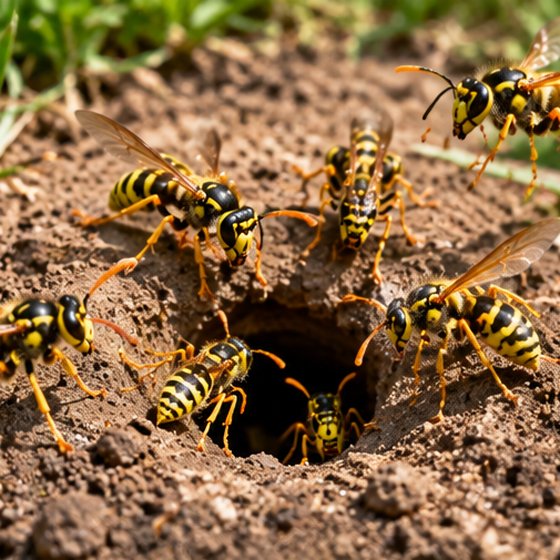
The temptation with a garden nest is that it feels reachable. It is out in the open, it is at head height, and the shop sells a can that says it deals with it. That combination is behind most of the bad garden stings we get told about.
Treatment goes in at the entrance and the nest is left where it is. In a hedge or a bank that is genuinely the end of it — an empty paper nest weathers away over the winter, and the birds usually get to it first.
Before the Visit
Keep children and pets out of that part of the garden, and leave the nest alone entirely — no cutting round it, no covering it, no moving the pots stacked against it. If washing is on the line near it, bring it in. Beyond that, nothing needs doing.
Afterwards: stay out of the immediate area until the activity has stopped, which is usually the same day and occasionally the next. Then the hedge can be cut.