The Same Three Places, Plot After Plot
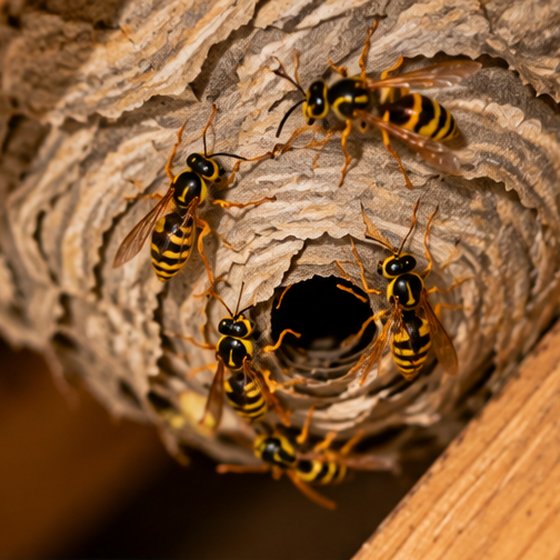
Modern houses are built to a pattern, which means their gaps are too. On estate housing the entrance is very often one of three things: the joint at the end of a uPVC soffit run, the gap where a dry-verge unit meets the tiles at a gable, or the ventilation slot behind the fascia.
None of those is a fault. They are manufacturing tolerances and deliberate ventilation, both of which are a few millimetres wider than a wasp. It is why neighbouring houses on the same estate get nests in the same corner of the roof, sometimes in the same year.
Boxed-In Roofs and Trussed Voids
A modern roof is a trussed void, usually felted, usually with the insulation laid between the ceiling joists. A nest in there is often built against the felt or up in the apex, and it can reach a good size without anybody hearing it — the felt and the insulation between it and the bedroom below muffle a great deal.
The advantage is that the entrance is nearly always on the outside and reachable, so the whole job is done from the ground without anybody going into the loft at all.
Soffits, Fascias and the Vent Strip
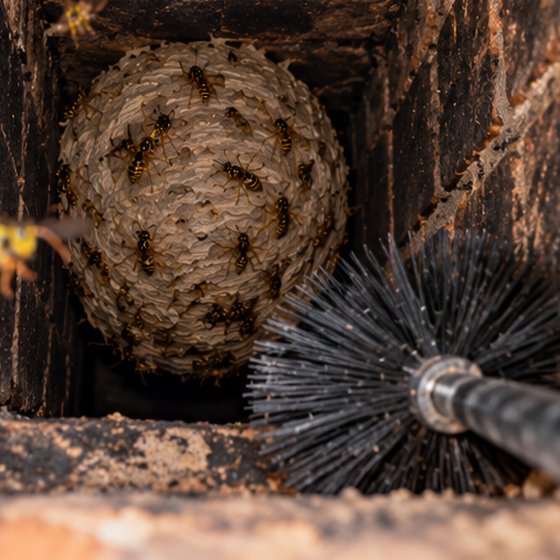
Continuous vent strip along a soffit is there for a reason and should not be sealed — blocking the roof's ventilation to keep wasps out trades an insect problem for a condensation one. Proofing a modern roof against wasps is mostly about closing unintended gaps at ends and junctions, not about closing the designed ones.
Do not foam the entrance. On a boxed soffit it is particularly tempting because the hole is small and accessible. Sealing a live colony in does not kill it; it makes several thousand wasps chew a new way out, and the shortest route from a soffit void is through the ceiling.
New Builds and the Developer
A nest is not a construction defect, and a developer will not treat it as one. What can be worth raising, if the house is still new enough for the builder to be responsible for finishing faults, is an actual gap — a verge unit that was never clipped down, a soffit joint left open — because that is workmanship rather than wildlife.
Either way, the nest gets treated now and the paperwork can follow. A colony does not wait for a site manager.