
The First Hour: It Gets Busier
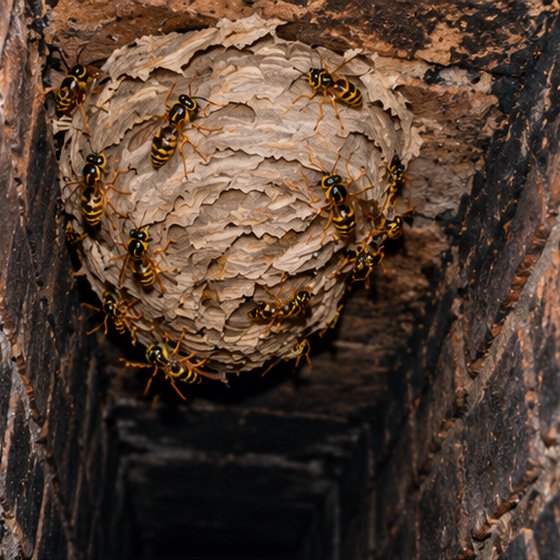
Wasps that were out foraging when the entrance was treated come back to it. They land, they mill about, they go in. For a period after treatment there is more activity at that spot than there was beforehand, sometimes noticeably more, and it is the single most common reason people ring thinking it has not worked.
It has. Every one of those returning wasps is walking through the treatment and carrying it inside. The spike is the delivery mechanism, not a failure of it.
The First Day: It Falls Away
Through the afternoon and evening the traffic drops sharply. Most of the foraging workers are dead within a few hours, and the colony inside is dying at the same time as the treatment is distributed through it.
By the end of the day the entrance usually looks quiet. There may be dead wasps on the ground below it, which is normal and does not need clearing up beyond sweeping them away if they are somewhere inconvenient.
Two to Three Days: Finished
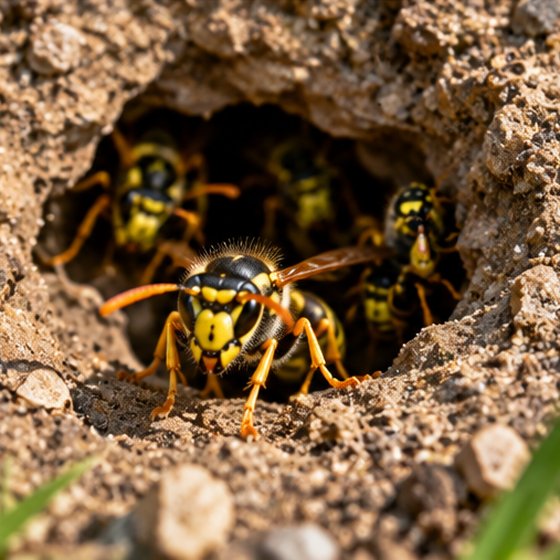
Stragglers can appear for a couple of days — individuals that were a long way out, or were sheltering somewhere overnight, returning to a nest that is already dead. They are disorientated rather than defensive and they do not restart anything.
By day three the entrance should be dead quiet. That is what finished looks like: not a single wasp anywhere on the property, which is not the same thing, but no traffic at that hole.
The test is the entrance, not the garden. Wasps foraging in from elsewhere will carry on regardless, because they never lived in your nest. Watch the hole, not the air.
When to Ring Back
- Real two-way traffic still at the same entrance after three or four days
- A steady stream appearing at a different point on the building — usually a second nest
- Wasps appearing inside the house in numbers when they were not before
- Anything that worries you enough to be reading this on day five
None of those is common, and the second is the likeliest. A second colony on the same property is not a treatment failure, and it is far better found on day four than left.
What Changes the Timing
Cold, wet weather slows it, because fewer wasps are flying and therefore fewer are carrying the treatment in. A very large colony takes marginally longer than a small one. A nest deep inside a cavity or a flue can take a little longer than one just inside a soffit. None of these changes the outcome, only the hours.