
Why It Matters More Than It Used To
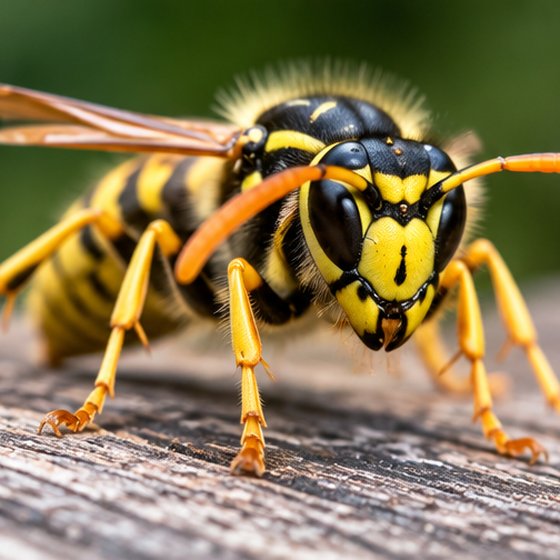
Pollinator numbers have been falling for decades, and honey bees and bumblebees are a meaningful part of what is left. A colony destroyed because somebody assumed it was wasps is a real loss, and it is entirely avoidable by one photograph before anybody is booked.
It is also avoidable waste. You would be paying for a treatment that in most bee cases is unnecessary, when a beekeeper will frequently collect a swarm for nothing.
What Happens to a Bee Colony Instead
A honey bee swarm — the dense clustered ball hanging on a branch, a fence or a wall — is the easy case. It is a colony in transit, it is usually gone within a day or two on its own, and local beekeepers will often come and collect it at no cost because a free colony is worth having.
An established colony in a chimney or a cavity is harder. It involves comb, honey and often opening up the structure, and not every beekeeper will take one on. It is still not our job, and a beekeeper or a specialist bee removal service is the right call rather than a pest controller.
Bumblebees, and Doing Nothing
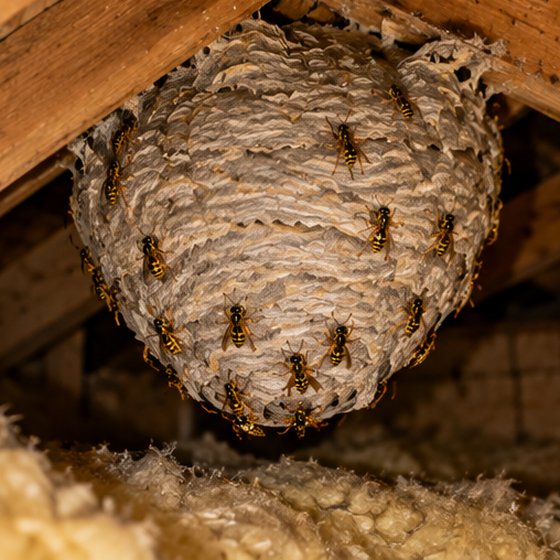
A bumblebee nest is small — often a few dozen insects rather than thousands — frequently in an old mouse hole, a compost heap or a bird box, and it dies out naturally by autumn. It will not be back in the same place the following year.
They are not aggressive and they sting rarely. In all but the most awkward positions the right answer is to leave it alone for a few weeks and let it finish, which costs nothing and is what we will tell you if you ring.
Masonry Bees: the One Most Often Treated Unnecessarily
Solitary bees using separate small holes in soft mortar. No colony, no nest to find, no defence of territory, and they will not sting you. The holes are almost always holes that were already there, because the bee uses existing gaps rather than excavating sound mortar.
So the mortar is the problem and the bees are the symptom. Repointing in the autumn deals with it permanently; treatment deals with this year's bees and leaves the holes.
And Hornets, Which Are Wasps
Larger, browner and more chestnut about the head and thorax than a common wasp, and the subject of more alarm than they deserve — they are notably less inclined to bother people than a late-season common wasp. They are treated like any other wasp nest where one is genuinely a problem.
The whole thing takes one photograph. Send it on WhatsApp before booking anything. If it is bees we will tell you so, point you at the right person, and charge you nothing for the answer.