
First: Stop, and Move Away Steadily
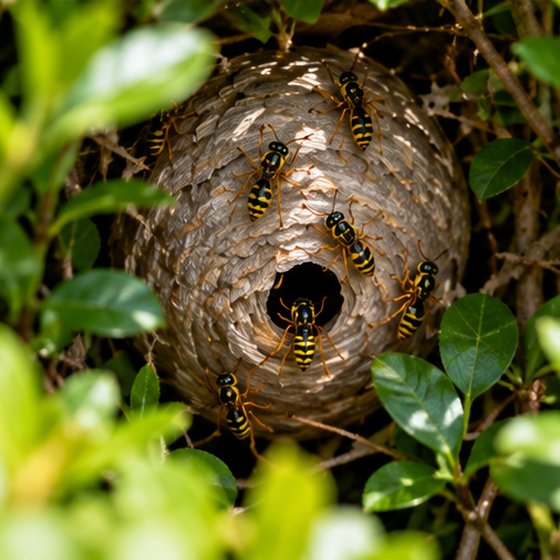
Back off calmly rather than quickly. Running, flailing and swatting all register to a colony as a threat, and a wasp that feels threatened releases an alarm signal that recruits others. Walking away at a normal pace almost always ends the encounter.
Get everyone else out of the immediate area too, and take the dog in. Then do nothing at all for a few minutes. A colony that has been disturbed settles within a short time if it is left completely alone, and the temptation to go back for another look is the thing that turns one sting into six.
Second: Stop the Machinery
No mowing, strimming, hedge cutting, rotavating or pressure washing anywhere near it, today or until it is dealt with. Wasps respond to vibration near the nest as an attack on it, and the person holding the machine is the one standing over the entrance with the noise covering the first warning. This is the single most common way people get multiple stings in a garden.
The same applies to anything that shakes the structure the nest is in — moving a stack of pots against it, pulling at the hedge, lifting decking boards, turning the compost.
Third: Make the Area Safe Without Going Near It
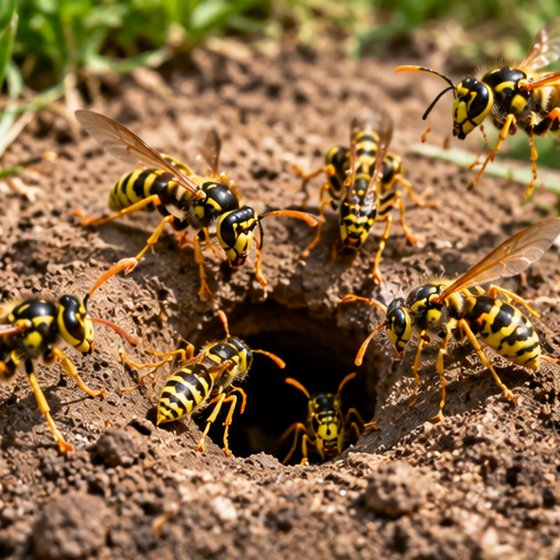
- Mark it from a distance — a cane a couple of metres away is plenty. Do not stand over it to place the marker
- Bring washing in off the line if it is nearby
- Move the paddling pool, the trampoline, the pet bowls and the children's toys to the other end of the garden
- Shut the shed or garage if that is where it is, and leave it shut
- Tell the children specifically where not to go — a landmark works better than 'the bottom of the garden'
- Tell the neighbours if it is near a shared boundary
Fourth: Leave It Exactly As It Is
Do not cover it, do not spray it, do not block the entrance, do not pour anything down it and do not try to knock it off. Every one of those is covered elsewhere on this site in more detail; in the first hour the only thing that matters is that the nest is easier and safer to deal with if nobody has touched it.
If it is in a hedge, do not cut round it to get a better view. If it is in the ground, do not put a bucket over it. If it is in a shed, do not go back in for the thing you went in for. It will all still be there tomorrow.
Fifth: Ring, With Four Facts Ready
Where it is, roughly how high, how close it is to where people walk, and whether anybody in the household reacts badly to stings. Those four things decide how quickly it needs doing and what gets brought, and they take about twenty seconds to say.
If you are not certain it is wasps rather than bees, take a photograph from a safe distance and send it on WhatsApp before booking anything. Bees are not treated, and nobody is charged for being told they have them.