
The Roof Void, By Some Distance
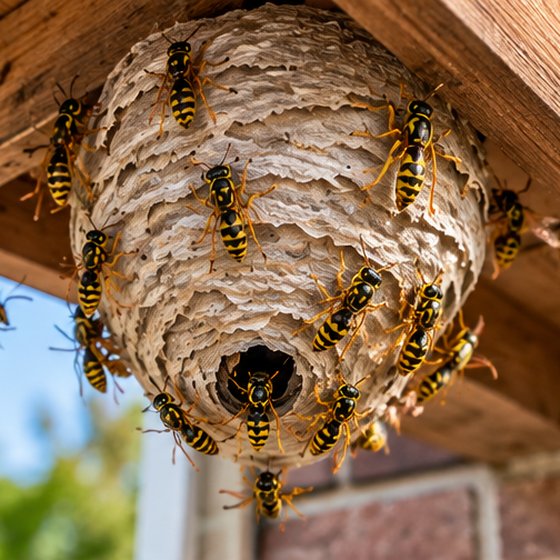
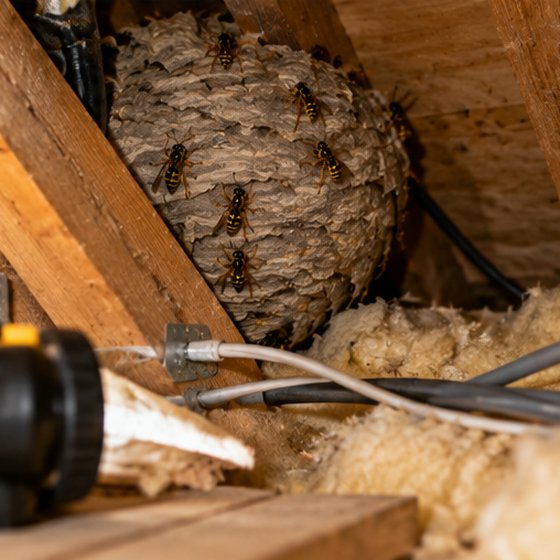
More nests are in roof spaces than anywhere else, and it is not close. A loft is large, dry, undisturbed for months at a time and full of small entrances at the eaves. The nest may be against the felt, up in the apex, or down in the insulation.
For the job it is usually the most straightforward category, because the entrance is on the outside and reachable, so nobody has to go into the loft at all. The nest is left where it is once the colony is dead.
Soffits, Fascias and the Roof Edge
The second big group, and often really the first one seen from the ground, because the traffic is at eye level from the garden. The wasps are using a joint at the end of a soffit run, a ventilation slot, a gap at a dry-verge unit, or the space behind a fascia board.
Sometimes the nest is in that shallow void; more often the void is simply the way into the roof. Either way it is treated at the opening, from the ground.
Chimneys, Walls and Airbricks
A disused flue is close to ideal and produces the nests that end up with wasps in the fireplace. Cavity walls are entered at airbricks, weep vents, eroded mortar and the gap round a waste pipe, and the colony can sit a storey above the hole it is using.
These two are the positions where blocking the entrance does the most damage. Wasps sealed into a flue or a cavity chew inward, and the nearest soft material is the plaster of the room on the other side.
Outside the Building Altogether
- In the ground — an old rodent run under a lawn, a bank or a border, marked only by a hole the size of a coin
- Hedges and shrubs — completely hidden until it is the size of a football
- Sheds, garages and stables — felt roofs and ceiling voids, usually found late because nobody goes in
- Under decking and raised patios
- Compost bins, log piles, hollow fence posts
- Bird boxes and disused outbuilding flues
Where They Almost Never Build
Anywhere with regular traffic, light and vibration. That is why nests in occupied rooms, in use chimneys, in busy garages and in the middle of a well-used garden are rare, and why almost every nest is found in a place nobody had looked at since the spring.
It is also the practical hint for anyone trying to find one: think about the parts of your property that have been left alone since April, and start there.