
The Colony Itself Does Not Come Back
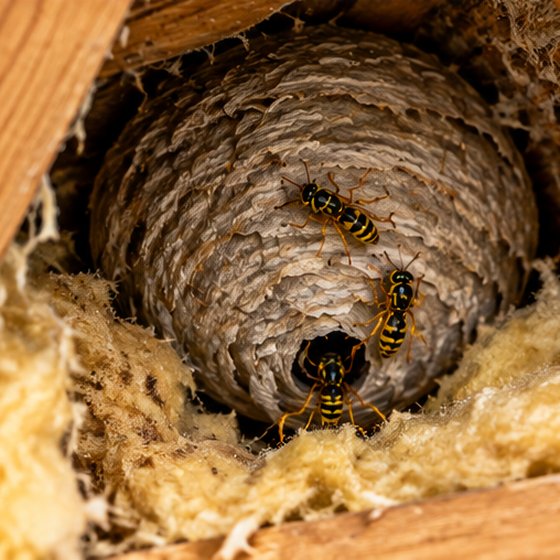
Once the queen is dead the colony has no way to replace her. There is no mechanism by which a treated nest recovers, restarts or produces a new queen to carry on. That part is settled, and it is worth saying plainly because it is the thing people are actually asking.
Nor will another colony move into the empty nest. Wasps build fresh every year and never take over an existing structure, so the nest in your loft is not accommodation waiting to be re-let.
One: Foragers From Somewhere Else
This is the commonest explanation by a distance. A foraging wasp works several hundred metres from home, so wasps at your bins, your fallen apples or your table in late August may be coming from a nest three gardens away that has nothing to do with you.
The way to tell is the same test as always: watch for a route. Wasps arriving from several directions and leaving in several directions are foragers. No stream in and out of a fixed point means no nest on your property, and no amount of treating your building will change what is in the air above your garden.
Two: A Second Nest
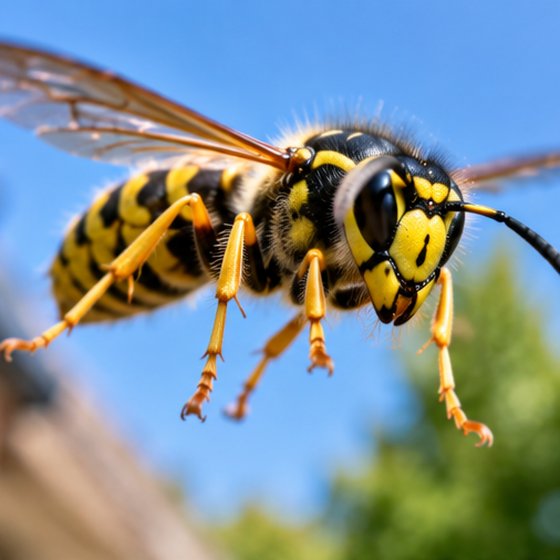
Less common but far from rare, particularly on larger properties and in a good wasp year. The giveaway is a new steady two-way stream at a different point on the building or the plot — the other gable, the shed, a hole in the lawn — while the treated entrance stays quiet.
That is a separate colony and a separate job, and it is not a failure of the first treatment. We establish whether there is more than one before treating, precisely so this does not come as a surprise a fortnight later.
Three: The Treatment Genuinely Did Not Take
Uncommon, and it looks specific: real two-way traffic still going in and out of the same entrance three or four days on, with no reduction. Not a handful of stragglers, not wasps in the garden — the same hole still working as a nest entrance.
Where that happens it usually means the nest had a second entrance that was not being used at the time, or the treatment did not reach far enough into a deep cavity. Ring us. It gets looked at.
How to Tell Which You Have, in Two Minutes
- Go and watch the treated entrance from a safe distance for a minute. Quiet? That nest is done.
- Now watch the property generally. Wasps drifting about with no pattern are foragers from elsewhere — nothing to treat.
- A steady stream at a new fixed point is a second nest. Ring and say where it is.
- A steady stream still at the old point is the one to ring about straight away.
The single most useful habit after any treatment: judge it by the entrance, not by whether you can see a wasp.