Damage Is the Usual Alarm, and Here There Isn't Any
In a house with wool carpet the sequence is: population builds, damage appears under something, somebody eventually moves that something and sees it. Slow, but it does end.
In a house with synthetic carpet over felt underlay, that sequence has no final step. The larvae feed on the underlay, the carpet above stays perfect, and no amount of moving furniture reveals anything, because there is nothing on the surface to reveal.
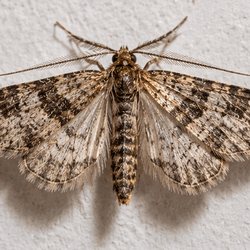
What actually gives it away, eventually. Adults. A handful of small moths a year, dismissed each time, then more of them, then somebody counts. The insect you can see is the only symptom this version of the problem produces.
How Long, Realistically
- Wool carpet, occupied house: a few years, until furniture moves
- Synthetic carpet over felt underlay: longer, and there is no natural end point at all — it runs until somebody investigates the moths rather than dismissing them
- A room used less than the others: longer again
- A consistently heated house: more generations per year, so a larger population in the same elapsed time
Modern insulation and consistent heating are genuinely relevant here. An unheated house gives the cycle a winter pause; a warm one does not, so the population compounds year-round.
What Gets Dismissed Along the Way
- One or two small moths, put down to an open window
- A few more in spring, put down to the weather
- Moths in a bedroom, put down to something in a wardrobe
- A vague sense there are more than there used to be, with nothing to measure it against
- No damage anywhere, taken as proof there is no problem
That last one is the mistake, and it is entirely reasonable. It is just wrong in this specific configuration.
How To Find Out Rather Than Wonder
- Count them. Date, room, number, weekly, on your phone. Two months of counts turns an impression into a fact
- Put a monitoring trap in each of two or three rooms, numbered and dated, at floor level. Compare which room is highest
- Lift a carpet corner in a wardrobe base in the room with the highest count and look at the underlay
- Check the rug, the sofa underside and the wardrobe in that room
- Look in the garage and the loft if there are textiles in either
That is a fortnight of very little effort and it settles a question that can otherwise run for years.
Why Finding It Earlier Is Worth Something
The treatment is much the same whenever you do it. What changes is how far it has spread — one room or four — and whether the underlay is still sound or has to come up along with the carpet.
Treatment starts from £220. If you have counts or trap numbers, bring them — for an underlay problem they are better evidence than anything you can see on the floor.
Carpet moths in Thatcham? Pest Services Berkshire treats carpet moths from £220. Carpet Moth Control in Thatcham has the full detail, or call 0118 336 1366.