The Honest Answer First
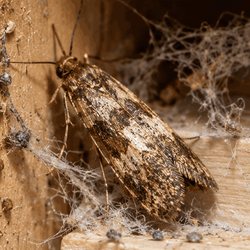
"Carpet moth" and "clothes moth" are everyday names rather than precise ones, and in ordinary use they overlap a good deal. Both are small textile-feeding moths whose larvae eat keratin. Neither is attracted to light, both are reluctant fliers, and both are found near the material they are feeding on.
So rather than trying to identify the moth from a glimpse of it crossing a room, the useful question is: WHAT IS BEING EATEN, AND WHERE? That is what determines the treatment, and it is something you can establish yourself.
The Distinction That Actually Matters
Damage at floor level
Carpet, underlay, rugs, the strip against the skirting, under furniture, stair edges. This is what people mean by carpet moths, and the treatment is centred on flooring and the harbourage around it.
Damage in wardrobes and drawers
Wool jumpers, suits, coats, blankets, stored textiles. This is what people mean by clothes moths, and the treatment is centred on storage, cleaning and the wardrobes themselves.
Both at once
Common, and the reason the labels matter less than people think. A house with damage in the wardrobe and along the carpet edge needs both dealt with, whatever the insect is called.
The mistake worth avoiding. Treating the carpet and not the wardrobe, or the wardrobe and not the carpet, because a name was settled on early. If there is damage in both places, both need doing — and one untreated reservoir will resupply the other for as long as you let it.
Two Larval Types You May See
This is the one genuinely useful physical distinction, and it is visible without expertise.
- Case-bearing larvae carry a small silk tube around with them, with fibres of their food woven into it, so the case matches the carpet or garment. You may find the case with nothing in it.
- Webbing larvae do not carry a case but spin silk where they feed, producing patches of fine irregular webbing over the damaged area, sometimes with debris caught in it.
Both do the same kind of damage and both need dealing with. It is worth mentioning which you have found when you call, because it helps.
Ruling Out the Moths That Are Not Either
Food or pantry moths
Similar size, often with two-tone banded wings, found around kitchen cupboards rather than floors or wardrobes. Their larvae live in flour, cereal, rice, pasta, dried fruit, birdseed and dried pet food, and they leave webbing in the packet rather than on the carpet.
If the moths are concentrated in the kitchen, empty the dry goods cupboard and check the packets before doing anything to the floor. This is a common and entirely avoidable misdiagnosis.
Outdoor moths
Larger, stronger fliers, drawn to lights and to open windows on warm evenings. They are not eating anything indoors and they do not need treating.
A Simple Sorting Test
- Are they attracted to lights? If yes, almost certainly outdoor moths. Neither textile moth is.
- Where are they concentrated? Kitchen cupboards suggests food moths. Floors, skirtings and wardrobes suggests textile moths.
- Where is the damage? Dry goods packets, carpet, or clothing. This is the answer.
- Is there webbing, and where? In a food packet, on the carpet, or in a wardrobe.
- Is anything wool involved at all? If nothing in the house is wool, silk, feather or fur, textile moths have nothing to live on.
Why It Changes the Treatment
- Floor-level activity needs carpet edges, under-furniture areas, rugs and stairs covered
- Wardrobe activity needs the contents dealt with as well as the space — cleaning is a real part of it, not an afterthought
- Food moths need a cupboard clear-out and no floor treatment at all
- Outdoor moths need nothing
Pest Services Berkshire treats carpet and clothes moths from £220. If we assess it and it turns out to be food moths or something harmless, we will tell you that rather than treat it.
Carpet moths in Berkshire? Pest Services Berkshire treats carpet moths from £220. Carpet Moth Control Berkshire has the full detail, or call 0118 336 1366.