
Why a Person Is Only a Passing Meal
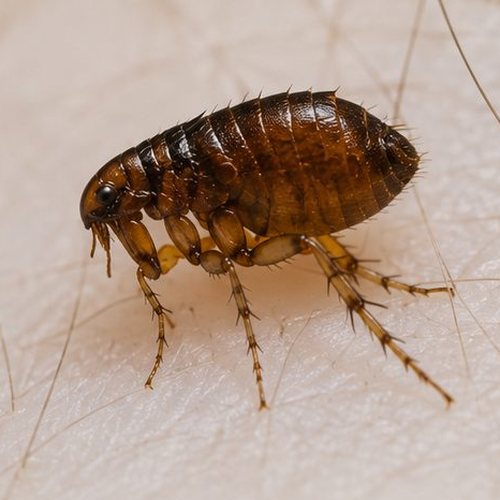
An adult flea is built for fur. Its body is flattened from side to side so it can slip between dense hairs, and the backward-facing spines on its legs and body hook into them so it cannot easily be groomed off. Human skin offers almost none of that. There is nothing to hold on to and nowhere to hide, and a flea on a bare arm is exposed in a way it never is in a cat's coat.
So a flea that bites you feeds, drops off and goes back to the floor. It does not lay eggs on you, and the eggs that keep an infestation going come from fleas living on an animal. That is why a house with no animal in it at all can still have fleas for a while, from pupae left behind, but the numbers do not build up on people alone. If that is your situation, the page on fleas with no pet in the house goes through it.
Why It Is Nearly Always the Ankles
Because that is as high as they get. A newly hatched adult waits in the carpet or a gap in the floor for something warm to pass, then jumps. A flea can jump a long way for its size, but in practice that puts it on your feet, ankles and lower legs, and that is where the bites cluster: small, itchy red spots, often several close together.
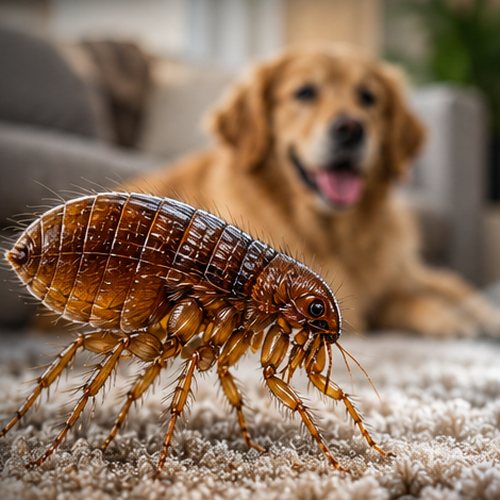
Bites higher up usually mean you were lower down. Sitting on the floor, lying on a sofa the dog uses or sharing a bed with a cat brings the rest of you within reach. If you are not sure the bites are fleas at all, the page on telling flea bites from other bites covers that question properly.
Why One Person Gets Bitten and Another Does Not
This is the question that puzzles households most, and the honest answer is that nobody knows exactly. It is well recognised that some people are bitten far more than others in the same room, and that some people react to bites strongly while others barely notice them. The likely factors are things like body warmth, breath and skin chemistry, but there is no simple test and we would not pretend otherwise.
What matters for you is that it tells you nothing about where the fleas are. The person who is not itching has very probably been bitten too and simply not reacted. It does not mean the problem is confined to one side of the bed or one person's bedroom.
The bites are on you; the fleas are on the floor. Every treatment that works starts from that. Washing yourself deals with nothing, because the next adult is already waiting in the carpet for you to walk past.
Hair, Clothes and Showering
A flea can end up in hair or clothing for a short time, usually after someone has been lying on a rug or cuddling an animal, but it will not set up home there. Human hair is too sparse on most of the body, and even on the head a flea is not in the right surroundings to breed. Head lice are a different insect altogether.
- Showering washes off any flea that happens to be on you and soothes the itching. It is sensible, but it is not part of getting rid of them.
- Clothes worn on the floor or on the pet's sofa can carry the odd flea or egg to another room. A normal wash deals with them.
- Socks are worth thinking about the other way round: white ones worn around the house show up fleas jumping on, which is a quick way to see which rooms are affected.
What Actually Ends the Biting
Three things together. The animal is treated by your vet, or with a product the vet recommends, because we treat the home, not the animal. The house is treated, with the floors, carpets, soft furnishings and pet areas covered. And for a few weeks afterwards you keep vacuuming while the last of the pupae hatch and meet the treated surfaces.
Our home treatment costs a fixed £220 and the price is confirmed before anything is booked. If bites are giving you real trouble, swelling or signs of infection, a pharmacist or your GP is the person to see; we can deal with the fleas, not the skin.