
How Fleas Get Around a Shared Building
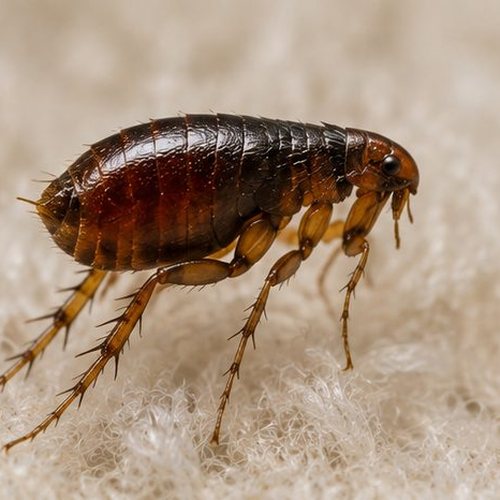
Fleas do not travel far under their own power. Once an adult finds an animal it tends to stay on it, but newly hatched fleas wait low down near where animals rest, ready to jump onto whatever passes. In a building full of separate homes, the things that spread them are shared routes: a carpeted stairwell, a landing where a neighbour's dog waits by the door, a communal hallway a cat has been using as a bed.
That is why flats and converted houses behave differently from a detached home, and a large town like Slough has a great many of both. Your own flat can be spotless and pet-free and still pick up fleas from the corridor, because a newly hatched flea will take a feed from whoever walks past.
Finding Where They Are Coming From
The first job is to work out whether the problem starts inside your door or outside it. A few questions narrow it down quickly:
- Do you, or anyone who lived in the flat before you, keep a cat or dog?
- Are the bites worst just inside the front door, or in the room where a pet sleeps?
- Is the landing or stairwell carpeted, and does an animal use it?
- Have neighbours on the same floor mentioned bites?
If the source is a pet in your own flat, the home treatment and the vet's treatment of the animal are what is needed. If the source is out on the landing, treating your flat helps you but the fleas will keep arriving until the communal parts are done.
The one thing that matters: if the communal hallway or stairs are carpeted, they need treating at the same time as the flat. Doing one without the other is the commonest reason fleas turn up again in a block.
Communal Areas and Who Books Them
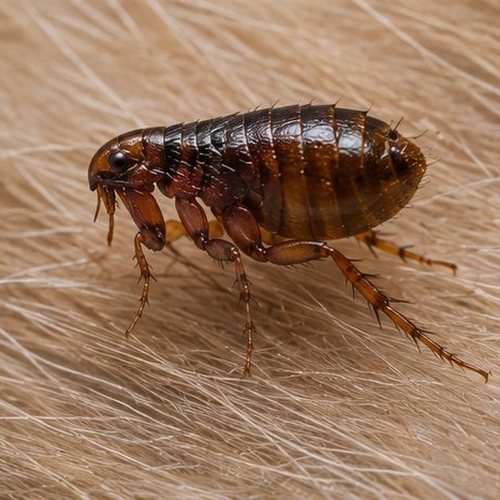
Hallways, stairs and landings usually belong to the freeholder or a management company, not to any one leaseholder or tenant. So the treatment of the shared parts normally has to be agreed by them. We can speak to a managing agent directly, and we will invoice whoever is actually paying.
If you rent, report the fleas to your landlord or agent in writing. Who pays depends on the agreement and on the cause, and we are not legal advisers; the landlord advice page covers the owner's side. If you rent and have no pet, our page on fleas left by a previous tenant's animal is the closer match.
Treating a Flat Properly
Inside the flat, every room the pet uses and every room it walks through gets treated, not just the bedroom where the bites are. In a small flat that is often the whole floor area. Why a single room is rarely enough is explained in do you need to treat the whole house.
The treatment is a residual insecticide on floors, carpets and soft furnishings, usually with an insect growth regulator. People and animals stay out of treated rooms until they are dry, and in a one-bedroom flat that can mean leaving for a while, so plan somewhere to go. Tell us at booking about babies, pregnancy, breathing conditions, fish tanks, birds, reptiles or small caged animals.
Being a Good Neighbour About It
A quick word with the people either side does more than anything else. If they have a pet, a vet's flea treatment for it closes the most likely source. If they have been bitten too, it strengthens the case to the managing agent for doing the communal areas. Nobody needs to be blamed; fleas are simply what happens where animals and carpet share a building.