
The Rule That Decides It
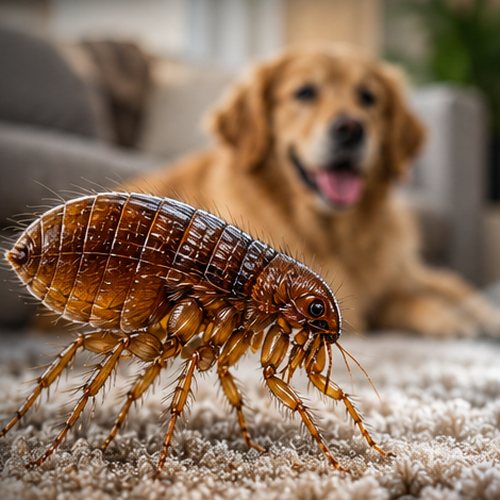
Flea eggs are laid on the animal, not in the house. They are not sticky, so they fall off wherever the pet shakes, scratches, lies down or simply walks. The house ends up seeded along the animal's whole daily life, thickest where it rests and thinner along its routes, but present in both.
That means the question to ask about any room is not whether you have seen fleas in it. It is whether the animal has been in it, or through it, in the last few months. Where it has, the room needs treating. Where it truly has not, it can usually be left.
The Rooms That Nearly Always Need It
- Wherever the pet sleeps. A basket in the kitchen, the end of a bed, a favourite armchair. These are where the most eggs land.
- The rooms where the family sits. A dog or cat spends its evenings where you do, so the living room is almost always involved.
- The rooms it walks through. Hallways, the kitchen on the way to the back door, the utility room with the food bowl. Fewer eggs, but enough.
- The stairs and landing. Every trip up to a bedroom goes this way, and carpeted stairs are among the places most often missed.
If you want to understand exactly where in each of those spaces the developing fleas sit, the page on where flea larvae live in a house goes through it spot by spot.
The Room With the Door Always Shut
A spare room, a study or a child's bedroom that the pet genuinely never enters is the one real candidate for leaving out. Be honest about the word never, though. A cat that slips in when the door is left open for an afternoon, or a dog that sleeps on a teenager's bed when nobody is looking, has been in that room.
When we visit we ask about each room rather than assuming, and if there is doubt we would rather include it. Leaving out a room that turns out to have fleas in it costs you a second round of bites and possibly a second visit.
Treating one room moves the problem. Fleas that hatch in an untreated room are not killed, and the animal carries fresh eggs straight back into the room you just did. Within a few weeks it looks as though the treatment failed, when really it was never given the whole house to work in.
Beyond the Four Walls
The car and any outbuilding the pet uses are worth one thought each. A dog that travels in the boot on a blanket, or a cat that sleeps in the shed, has left eggs there too. They are covered in more detail on the page about the car, the dog bed and the pet's routes.
What It Means for the Visit and the Price
Our flea treatment is a fixed £220 for the home and is confirmed before anything is booked, so choosing which rooms to include is about doing the job properly rather than trimming a bill. What we use is typically a residual insecticide on floors, carpets, soft furnishings and pet areas, often with an insect growth regulator that stops larvae developing.
Everyone, and every animal, stays out of the treated rooms until it has dried, and you follow the instructions we give on the day. At booking, tell us about babies, pregnancy, asthma or other breathing conditions, fish tanks, birds, reptiles and small caged animals. How to get the rooms ready is covered in preparing your home for flea treatment.