
Why the Bite Itself Is a Poor Witness
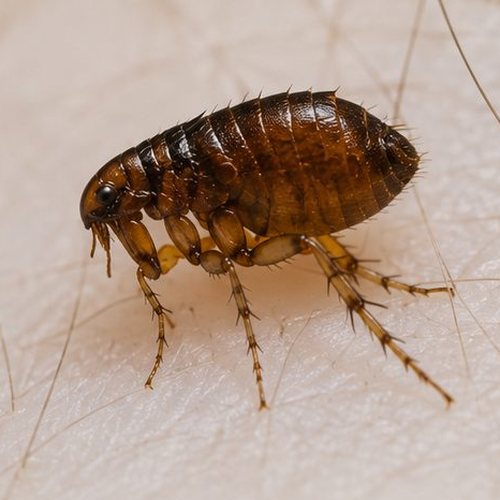
Most insect bites on people look alike: a small raised red spot that itches, sometimes with a darker centre. Skin reacts differently from person to person, so the same flea can leave one member of a household covered and another untouched. Looking harder at a single spot will not tell you what made it.
What does help is the pattern. Where on the body the marks are, whether they arrived indoors or outdoors, what time of day they turned up and whether they keep coming back in the same room are far better clues than the shape of any one bite. We are not doctors, and a rash that is spreading, blistering or making you unwell is one for a pharmacist or your GP, whatever caused it.
The Pattern Fleas Leave
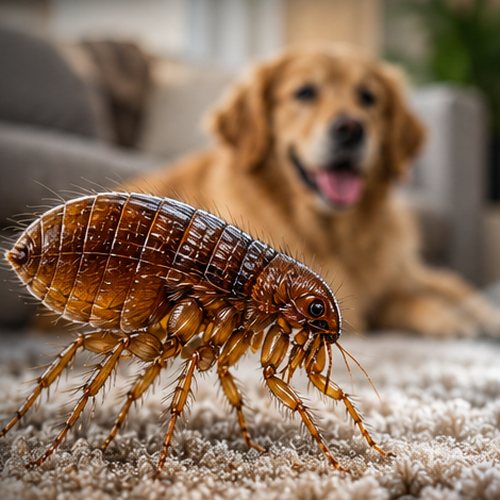
Fleas live low. They jump up from carpets, rugs and sofas, so the bites cluster round the ankles, shins and backs of the knees, often in small groups or short lines. If you sit on the floor or on a sofa the pet uses, you may also find them on the waist or arms.
- They appear after time spent indoors, especially in the rooms the animal rests in.
- They keep coming, day after day, rather than arriving in one batch.
- Whoever walks about barefoot or in thin socks tends to get the most.
- The pet is scratching, nibbling at its back or grooming more than usual.
What Else Bites People Indoors and Out
Gnats, midges and mosquitoes
These bite exposed skin outside, most often around dusk: faces, necks, forearms. A batch after an evening in the garden or by the river that does not repeat once you stay indoors points away from fleas.
Mites
Harvest mites in long grass in late summer tend to bite where clothing is tight, round sock tops and waistbands. Bird mites can come indoors when a nest in the eaves or loft is abandoned, and tend to bite at night near the nest side of the house. Both are worth thinking about if nobody in the home has a pet.
Bed bugs
Bed bug bites turn up overnight on skin exposed in bed — arms, shoulders, neck — rather than on the ankles. We have already set out the differences in full on our bed bugs vs fleas page, so it is not repeated here.
Two Checks That Settle It
Pull on a pair of long white socks and walk slowly round the room the pet uses most, shuffling over the carpet and along the edges. Fleas jump onto them and show up as dark specks that move. Then comb the animal over a sheet of damp white kitchen paper: black grit that spreads into red-brown smudges is flea dirt, which is digested blood.
Evidence beats guesswork. One positive sock walk or one smear of red on wet paper tells you more than a dozen bite photographs. Do both before you buy anything.
Other signs in the home are covered on the signs of fleas page. If both checks come back positive, the home needs treating as well as the animal, and treatment in Newbury is a fixed £220 that is confirmed with you before anything is booked.