
Why One Half Is Never Enough
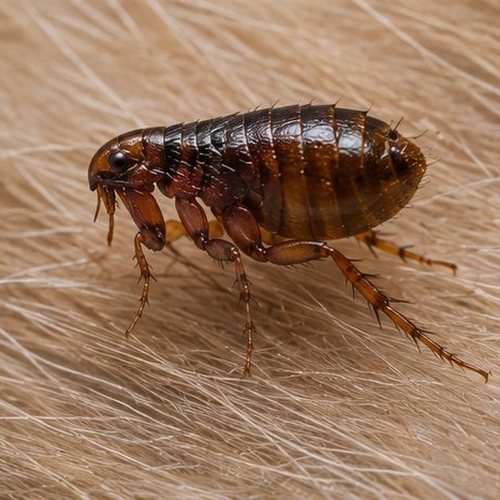
The adult fleas you find on a dog or cat are the smallest part of the problem. They live on the animal, feed and lay eggs, and those eggs are smooth and drop off within hours wherever the animal sleeps, sits or scratches. So most of an infestation at any moment is eggs, larvae and pupae in the home, not adults on the pet.
Put those two facts side by side and the reason for doing both is plain. Treat only the animal, and a steady supply of new adults keeps hatching out of the carpet and jumping back on. Treat only the house, and an untreated animal carries on laying eggs into the rooms that have just been done.
The one thing to remember: we treat the home, not the animal. The pet is treated by your vet, or with a product the vet recommends, and that should be in place before or on the day of our visit.
What the Vet's Treatment Does
A vet-recommended product kills the adult fleas that climb aboard and, depending on the product, stops their eggs developing. It turns the animal into a moving trap rather than a moving source. What it cannot do is reach the larvae buried in the carpet pile or the pupae sitting in their cocoons along the skirting.
Choosing that product is a decision for the vet, because it depends on the species, the age, the weight and the health of the animal. We do not recommend or sell anything to put on a pet, and we would rather you asked the vet than a shelf in a supermarket.
What Our Treatment of the House Does
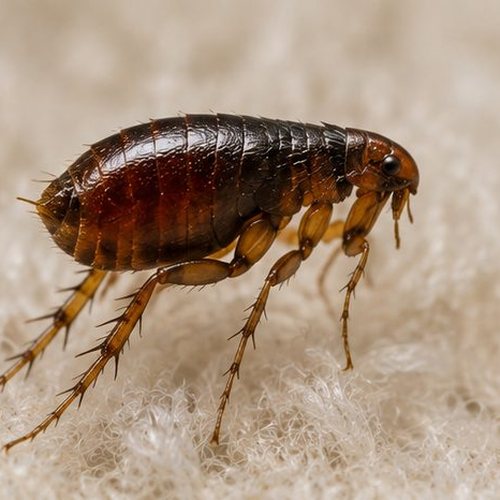
The home treatment is usually a residual insecticide applied to floors, carpets, soft furnishings and the places the animal rests, often combined with an insect growth regulator that stops larvae growing into adults. It stays active on those surfaces, which matters because the cocoons themselves resist treatment.
That is why fleas do not vanish on the day. Adults go on emerging from cocoons for a few weeks, land on treated surfaces and die. What to expect in that stretch is covered in how long flea treatment takes to work.
Getting the Order Right
- Speak to the vet first, whether that is a practice in Twyford or further afield, and get every animal in the house treated, including the cat that never seems to scratch.
- Book the home treatment for the same week, so the two start working together.
- Vacuum thoroughly the day before, wash pet bedding hot and clear the floors. The full list is in how to prepare your home.
- Keep the vet's treatment going on schedule afterwards. A lapse a month or two later is one of the commonest reasons fleas return.
The price for the house is a fixed £220 and is confirmed with you before anything is booked. The vet's charges are separate and nothing to do with us.
On the Day, and Afterwards
Everybody, and every animal, stays out of treated rooms until the surfaces have dried, and you follow what you are told on the day. Mention at booking if there is a baby, a pregnancy, asthma or another breathing condition, a fish tank, birds, reptiles or small caged animals, because each changes how the visit is planned.
Once the house is done, staying clear is mostly about the animal again. The routine that stops it all starting over is set out on the Cookham page.