
Why Older Floors Hold on to Fleas
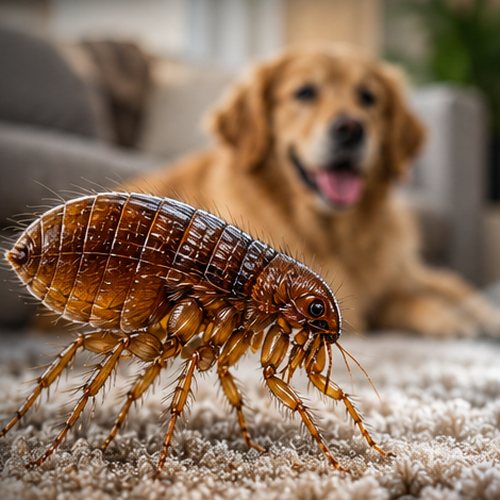
Flea larvae hate light. They burrow away from it and feed on the debris that collects wherever a floor is not quite sealed, including the dried blood that adult fleas pass as flea dirt. A fitted carpet on a modern screed gives them the pile to hide in. An older timber floor gives them far more.
Boards shrink over the years and open up gaps between them. Skirting boards pull away from the floor. Old floors are often boarded over, rugged over or carpeted over, with the dust of previous decades still underneath. Every one of those gaps is sheltered, dark and full of the kind of fine debris larvae eat.
Where to Look on Boards and Around the Edges
On bare or stripped boards, fleas are easier to see than on carpet: they show up as dark specks that jump. Look where the pet lies and along the lines between boards nearby. The joint between floor and skirting, the gap under a door threshold and the edges of a rug laid on boards are all worth a look with a torch.
A full room-by-room map of where larvae live, from stair treads to sofa bases, is on our page about where flea larvae live in a house. On an older floor, the gaps are the part that makes the difference.
The one thing to do before we come: vacuum the gaps, not just the surface. Run the crevice tool along every board line and the skirting in the rooms the pet uses, then empty the vacuum outside.
Treating Floors That Are Not Flat and Sealed
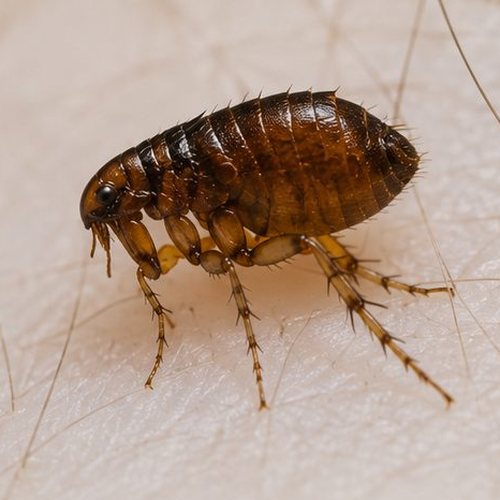
The treatment is a residual insecticide applied to floors, carpets and soft furnishings, usually with an insect growth regulator that stops larvae developing. On old boards the aim is to get it into the board joints and along the skirting line, because that is where the larvae are, rather than simply across the top.
Tell us when you book what the floors are: waxed or oiled boards, painted boards, old parquet, a rug on boards, or carpet laid over something older. Finishes vary in how they take a treatment, and knowing in advance lets us plan it. Rugs should stay in place so the floor beneath them is treated too, unless we say otherwise.
As always, people and animals stay out of the treated rooms until they have dried. At booking, mention babies, pregnancy, asthma or other breathing conditions, and any fish, birds, reptiles or small caged animals in the house.
Sealing Gaps: What Helps and When
Filling the gaps between boards, or sealing along the bottom of the skirting, does reduce the places larvae can hide in future. It is a reasonable job for later, but not before the treatment: sealing live larvae and cocoons into a gap just means they are still there, out of reach.
Sanding a floor has the same catch. If you are planning to strip or sand, it is better done after the fleas are dealt with and after the period you are told not to wash or clean the floors has passed.
What to Expect Over the Following Weeks
Cocoons resist treatment, and older floors have plenty of places for them. Adults will keep emerging for a few weeks, land on the treated surfaces and die. Keep vacuuming daily, gaps included, because the vibration brings them out sooner. The full timeline is in how long flea treatment takes to work.