
Why Late Summer and Autumn Feel Worst
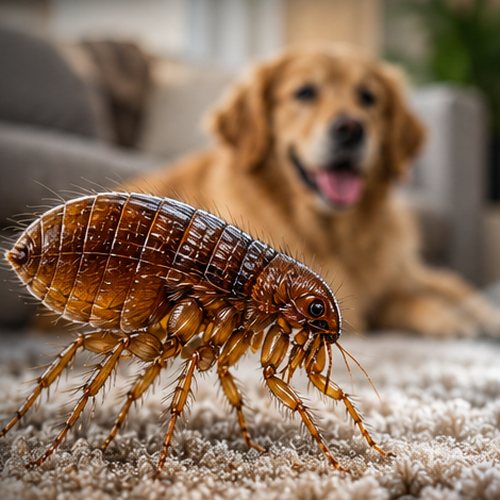
Through the warm months a dog or cat outdoors is picking up fleas from the garden, from other animals and from wildlife. Each female lays eggs on the animal, and those eggs fall wherever it lies down. By the end of summer a home can hold weeks of eggs, larvae and cocoons that nobody has seen.
Then the weather turns, windows close, the family spends more time indoors and the radiators come on. All of that — warmth, footfall, vibration — is exactly what tells a waiting pupa that a host is near. A household that thought it had a few fleas in August can find it has a great many in October.
What Central Heating Changes
In an unheated building the cold slows every stage down, and a winter can bring an infestation almost to a standstill. Modern homes do not do that. Well-insulated houses with carpets over a warm floor, and radiators running from autumn to spring, give flea larvae steady conditions they like, so the cycle carries on straight through the winter.
Much of the housing in Thatcham is modern, well sealed and evenly heated, which is comfortable for people and equally comfortable for fleas. The places that stay warmest — the carpet in front of a radiator, the pet bed by the boiler cupboard, the rug on an underfloor-heated kitchen — are the places to check first.
Winter is not a pause. If there were fleas in the house in September and nothing was done to the home, assume they are still breeding in January. The cold outside does not reach the carpet.
Keeping the Animal Covered All Year
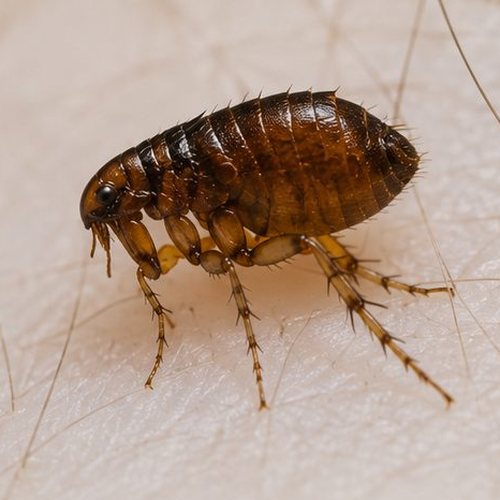
A common gap is stopping the pet's flea treatment when summer ends. In a heated house there is no off season, and a lapse over the winter months gives the fleas already in the carpet a host to return to. Ask your vet what they recommend and keep to the schedule they give you, every month of the year.
The vet looks after the animal. We look after the home, and the two need doing together, because treating one without the other leaves either the pet or the carpet to restart the problem.
Timing a Treatment Around the Heating
There is no bad month to treat a house, but there is a good reason not to wait for spring. Every week an infestation is left, more eggs go down and more cocoons form, and a larger population takes longer to clear. Treatment is a fixed £220 that is confirmed with you before anything is booked.
- Keep the heating on as normal after the visit: warmth brings waiting pupae out to meet the treated surfaces.
- Vacuum every day for the period we give you, for the same reason.
- Expect to see a few fleas for a while afterwards; how long treatment takes to work explains why.
- Do not wash or shampoo the carpets until we say so.