
The Name Is Misleading
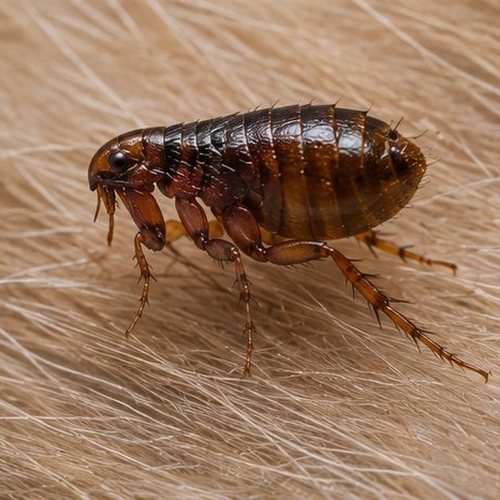
The cat flea is the flea usually found on both cats and dogs in UK homes. It was named after the first animal it was described from, not because it keeps to cats. It will feed happily on a dog, on a rabbit or ferret, and on people when there is nothing better nearby.
So a household with only a dog, and no cat anywhere near it, is still most likely dealing with cat fleas. Nobody has done anything wrong; that is simply the species that dominates in British houses.
Where the Dog Flea Fits In
The dog flea is a separate species and it does exist here, but it is less common. It turns up more on dogs that spend a lot of time outdoors or in kennels, or in rural settings, than on a family dog that lives on the sofa.
To the naked eye the two look almost identical: small, dark reddish-brown, flattened side to side, and very quick. Telling them apart needs a microscope and a look at the head, which is not something you need to do at home.
Hedgehog and Bird Fleas
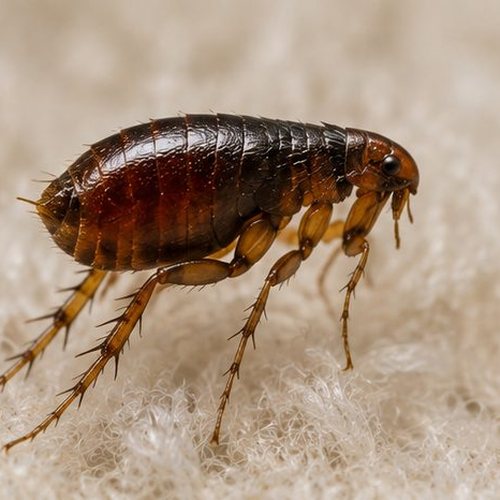
Now and then a pet brings in a flea that is not meant for it at all. Hedgehog fleas are picked up by dogs and cats that nose around hedgehogs in the garden, and bird fleas come from old nests in hedges, eaves or sheds. These fleas are passengers rather than settlers: they do not usually breed well on a cat or dog, and an outbreak of them tends to be short and patchy.
If fleas keep appearing in a home with good vet treatment in place, wildlife is worth thinking about, and the page on rural homes, wildlife and outbuildings covers that.
The species does not change the home treatment. Cat fleas and dog fleas share the same life cycle, egg to larva to pupa in a silk cocoon to adult, and the eggs and larvae live in the same places in the house. What works against one works against the other.
Why We Treat the Same Way Either Way
Most of a flea infestation at any moment is eggs, larvae and pupae in the home rather than adults on the animal, whichever species it is. So the treatment is the same: typically a residual insecticide on floors, carpets, soft furnishings and pet areas, often combined with an insect growth regulator that stops larvae developing. It costs a fixed £220 and is confirmed before anything is booked, and we do not need to know the species to quote it.
The safety arrangements do not change either. Everyone and every animal stays out of treated rooms until they have dried, and you tell us at booking about babies, pregnancy, asthma or other breathing conditions, fish tanks, birds, reptiles and small caged animals.
When It Is Worth Asking the Vet
The animal itself is treated by your vet, or with a product the vet recommends, because we treat the home, not the animal. The vet is also the right person if you want the flea identified, if a pet is reacting badly to bites, or if you have several species of animal and need to know what is suitable for each. Some products made for dogs are dangerous to cats, which is one more reason to ask rather than guess. Homes with cats in particular are covered on the cat households page.